
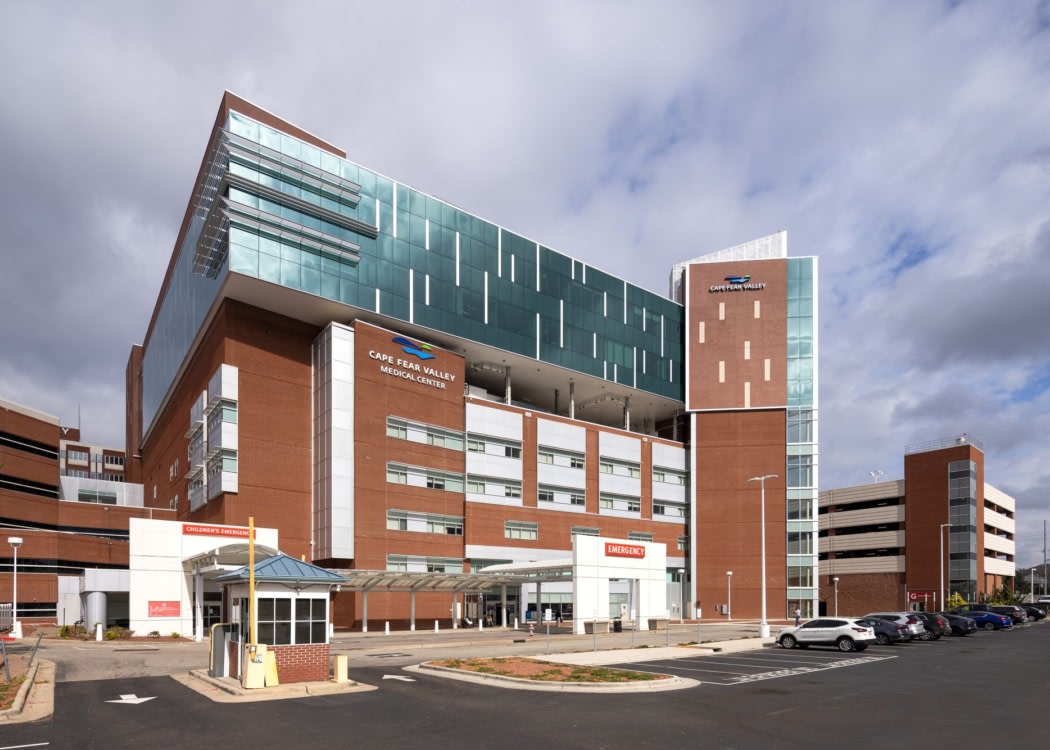
Cape Fear Valley Pavillion Vertical Expansion
Little Diversified Architectural Consulting’s Cape Fear Valley Pavilion Vertical Expansion in Fayetteville, North Carolina, innovatively enhances hospital capacity and care delivery with a resilient, sustainable design that prioritizes both functionality and community well-being.
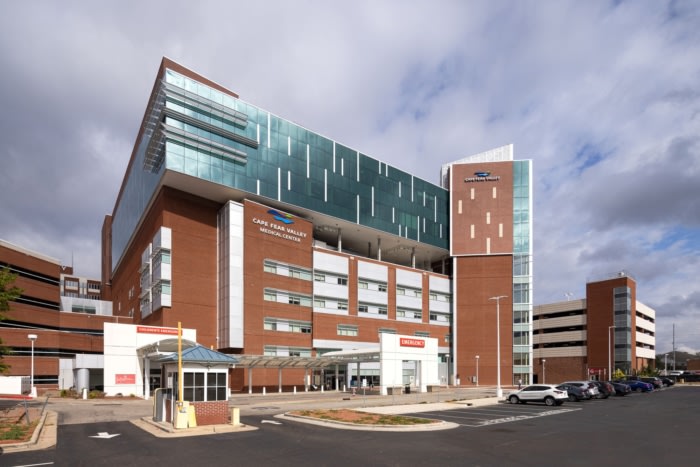
Cape Fear Valley Medical Center’s Vertical Expansion is a bold example of how innovation, resilience, and compassionate care prevail, even in a highly constrained healthcare setting. Completed in 2024, the $110 million, 93,200-SF project added 92 new beds and two rooftop helipads atop the existing pavilion, delivering critical capacity while maintaining uninterrupted hospital operations. Located between an active Emergency Room and the Main Entrance, the work required exceptional planning and technical precision to expand without disrupting care.
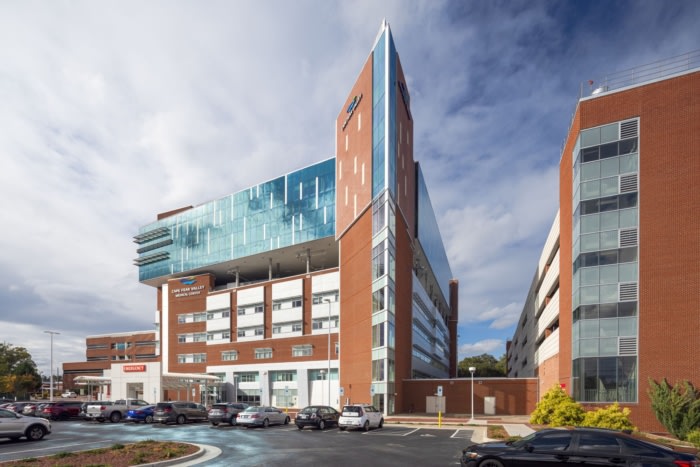
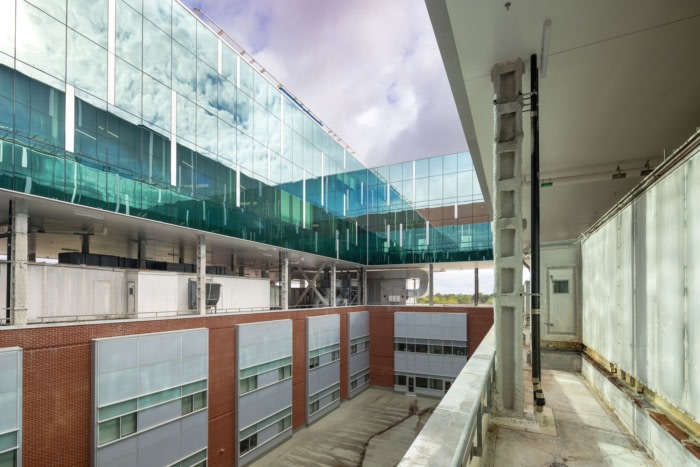
Facing evolving building codes, limited site logistics, and the complexity of building up rather than out, the team converted the original 5th-floor roof into a fully functional interstitial mechanical space. This preserved the existing waterproofing system, kept HVAC systems running throughout construction, and futureproofed the facility for equipment upgrades. Above, three steel-framed floors and a mechanical penthouse were engineered to minimize seismic load using lightweight concrete and steel decking.
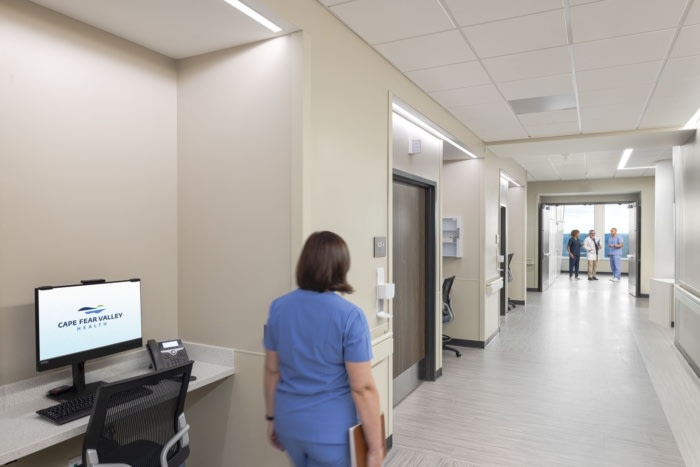
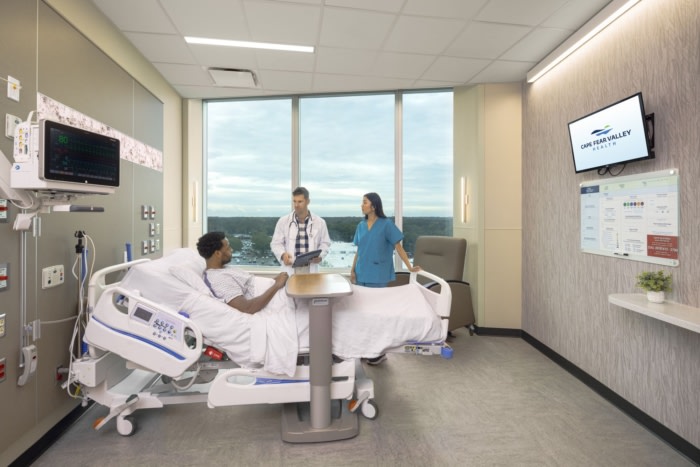
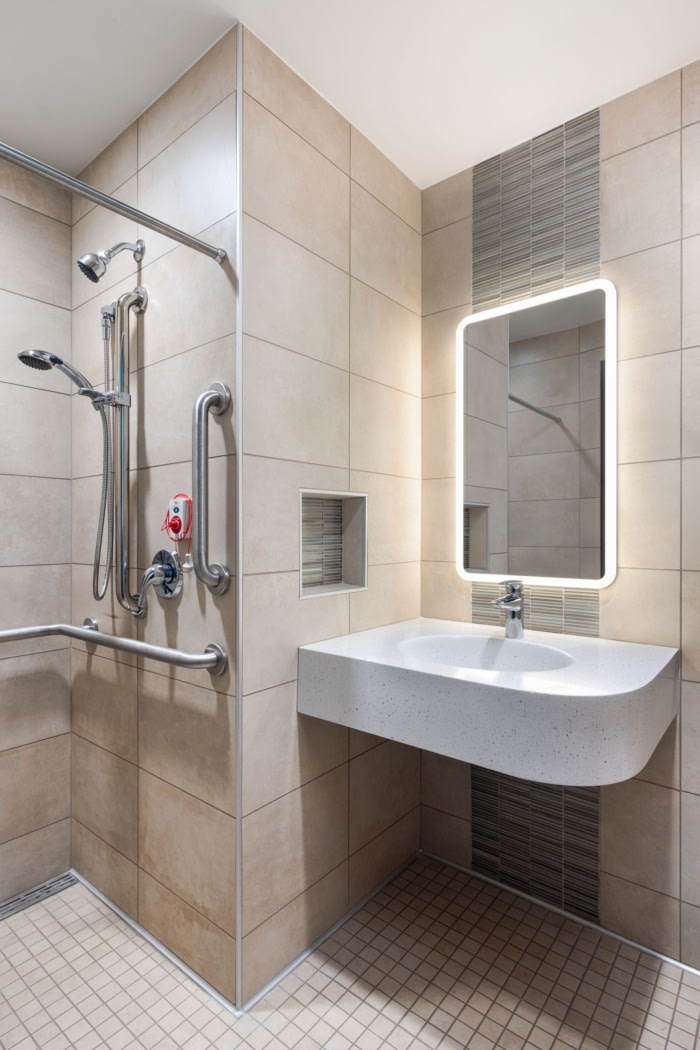
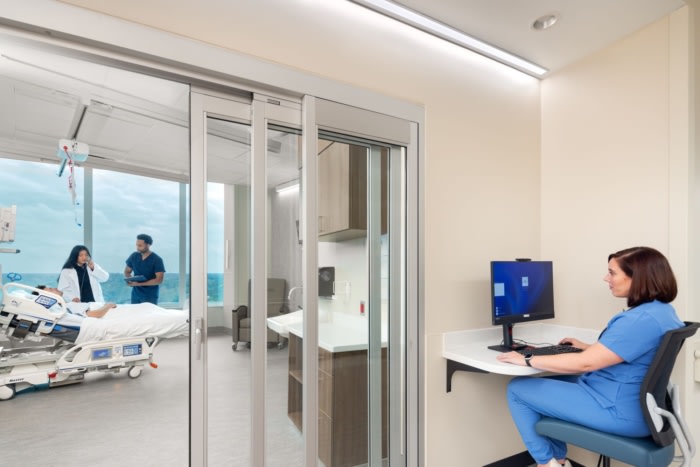
Inside, the design prioritizes safety and caregiver support. To accommodate larger, same-handed patient rooms, the team employed cantilevered transfer girders and reconfigured braced frames, enabling a flexible new layout. Centralized team stations paired with decentralized work points increased patient visibility by 48% and supported a team approach to care, while respite spaces support staff well-being. A universal room improved workflow and patient experience, with targeted safety upgrades, including repositioned toilets that reduced travel distance by 45% and larger windows that increased daylight access by 280%.
Sustainability and constructability were embedded from the start. Choosing vertical expansion over demolition reduced the project’s carbon footprint by 41%, preserved greenspace, and minimized site impact. Prefabrication also played a key role in meeting an aggressive schedule and tight staging constraints: bathroom pods, MEP racks, headwalls, electrical rooms, exterior panels, and helipads were fabricated off-site to improve quality, safety, and schedule performance while reducing waste.
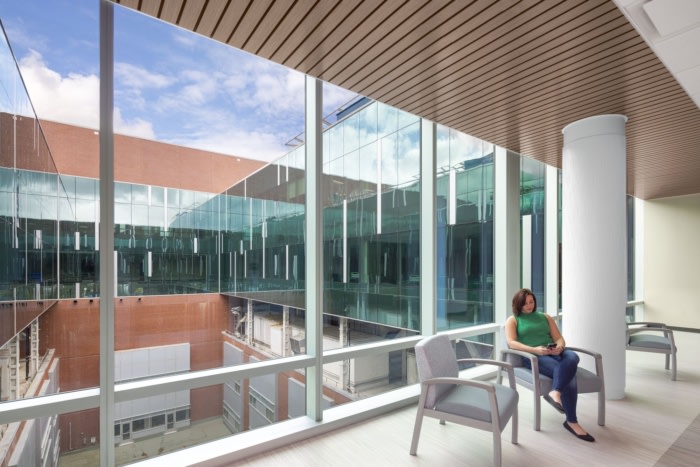
A strategic shift from brick to glass created a lighter façade that supported structural goals and signaled transformative progress. Expansive glazing and exterior LED lighting animate the building, reinforcing the health system’s vision of innovation. The project’s broader impact is equally significant, reducing ER delays and enhancing trauma response, including a helipad equipped for Black Hawk landings to support Fort Bragg’s military community. The rooftop fire suppression system is water-based and free from carcinogenic foams, making it the first of its kind in the country.
Delivered through Integrated Project Delivery and design-assist collaboration, the expansion reflects Cape Fear Valley Health System’s values and demonstrates how integrated design can elevate care delivery, support caregivers, and strengthen communities.
Design: Little Diversified Architectural Consulting
Photography: Sterling Stevens







Now editing content for LinkedIn.