
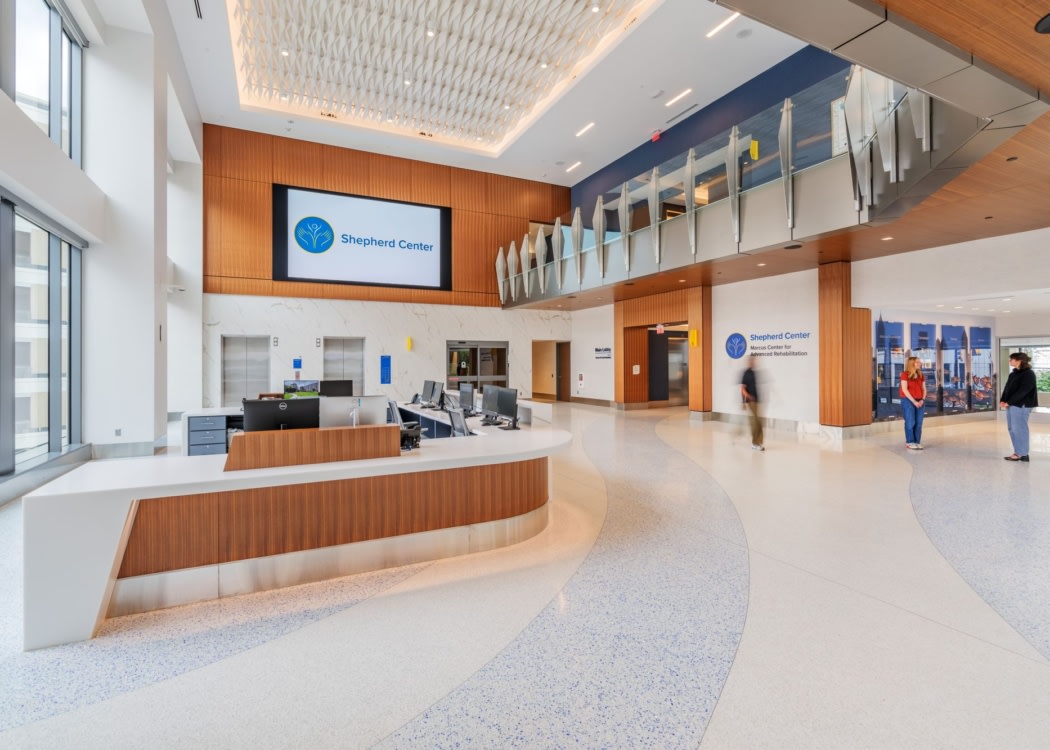
Shepherd Center – Marcus Center for Advanced Rehabilitation
Rule Joy Trammell + Rubio’s Marcus Center for Advanced Rehabilitation in Atlanta redefines neurorehabilitation design through innovative spaces, advanced technology, and a commitment to enhancing patient care and outcomes.
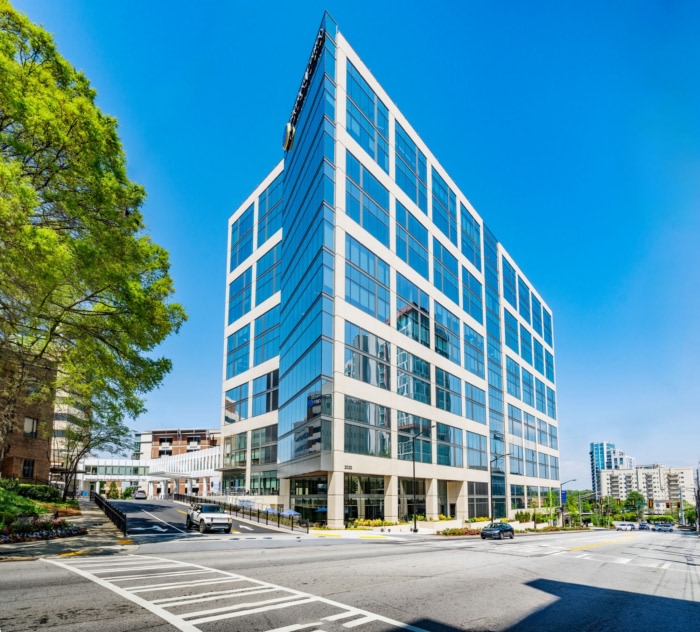
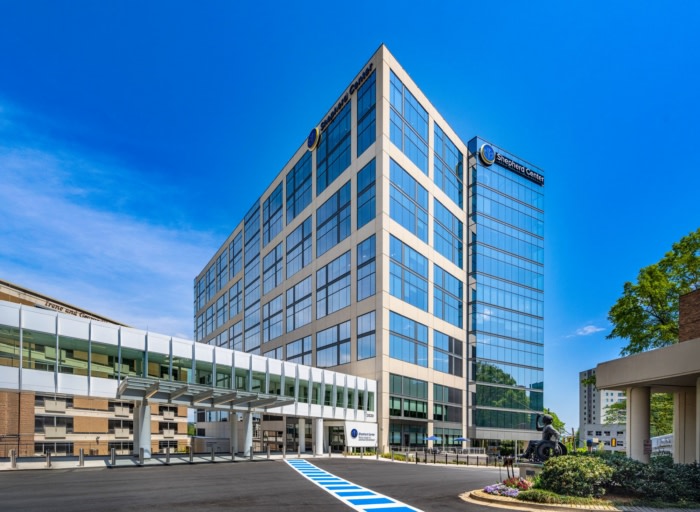
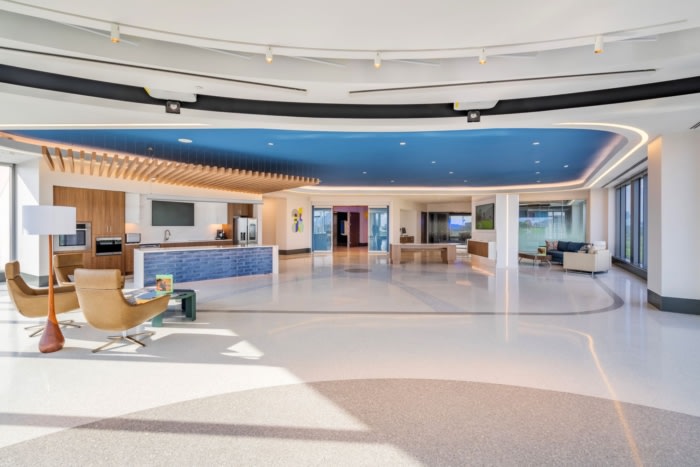
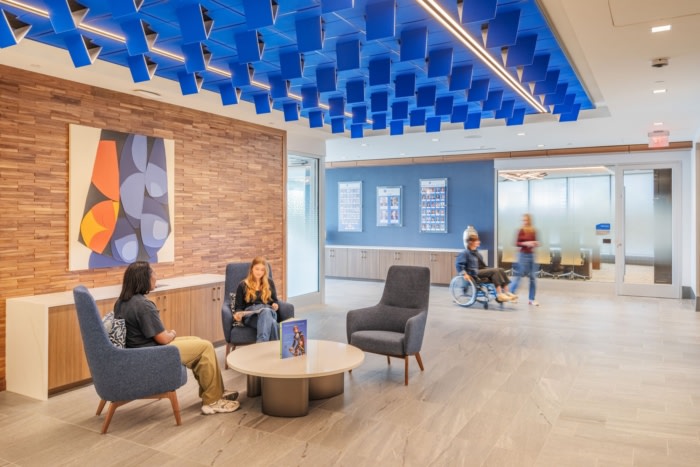
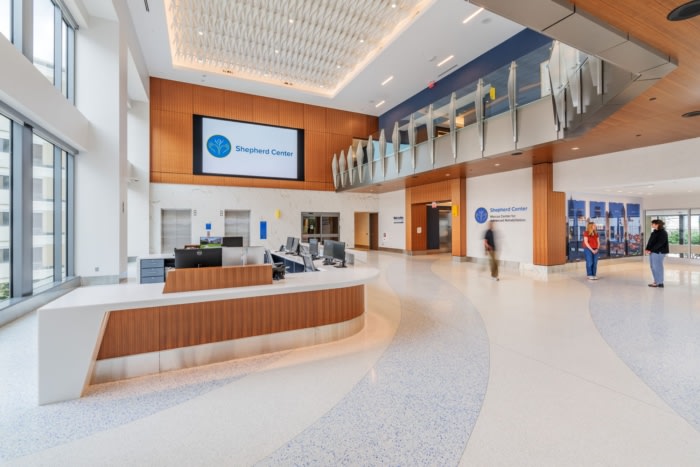
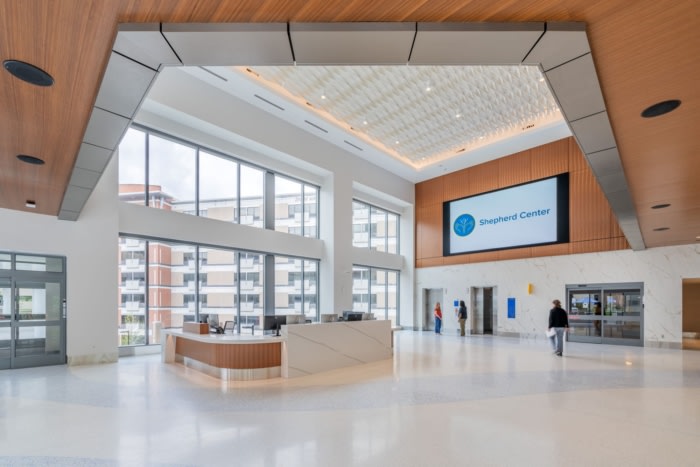
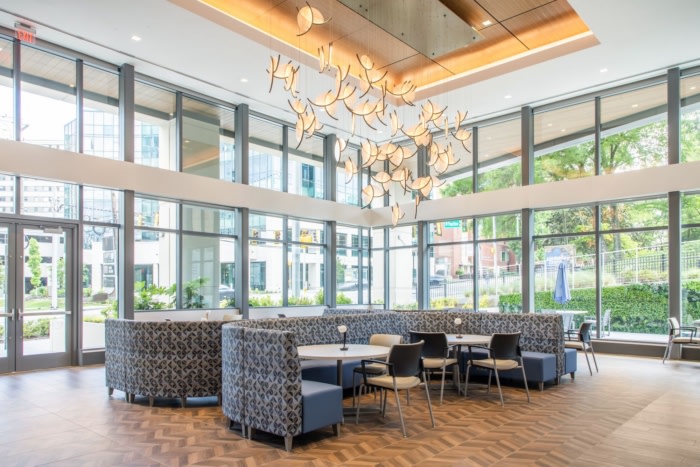
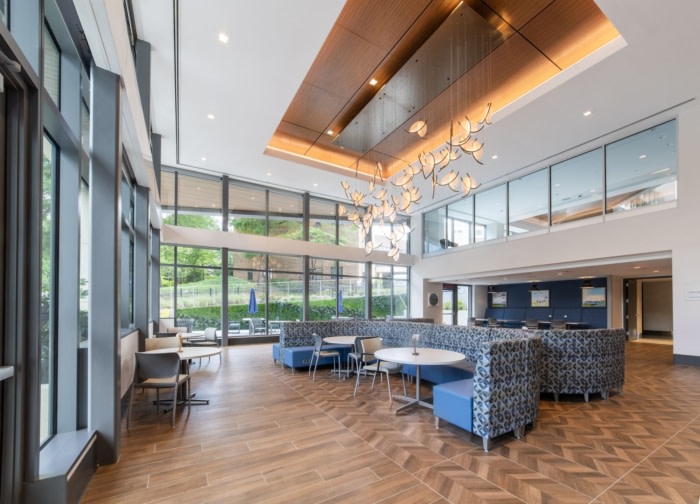
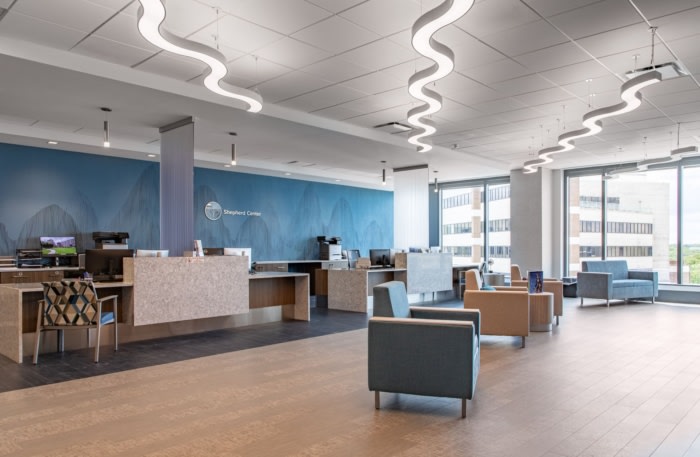
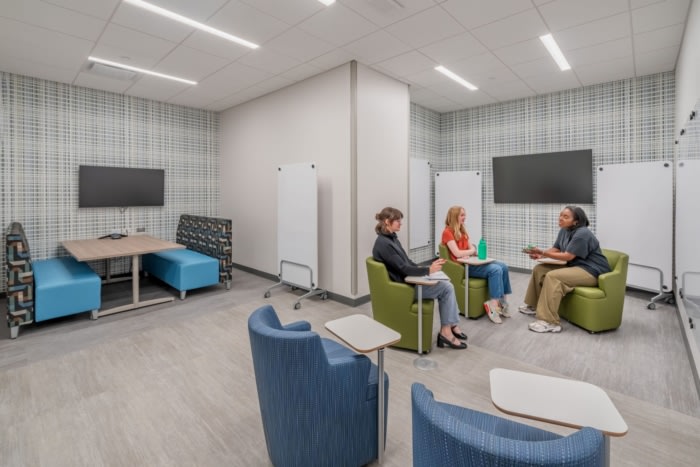
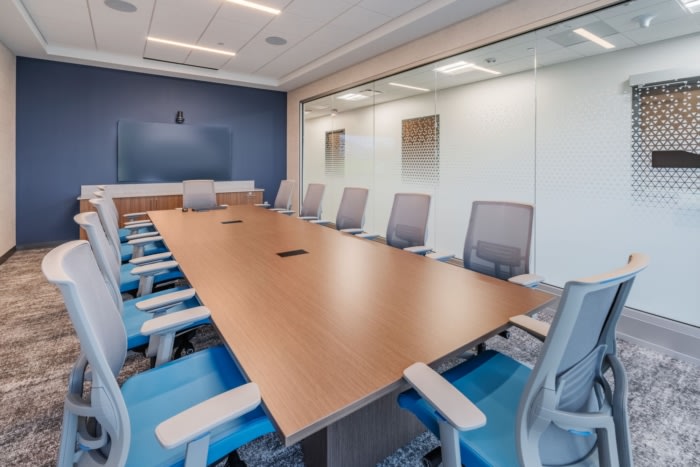
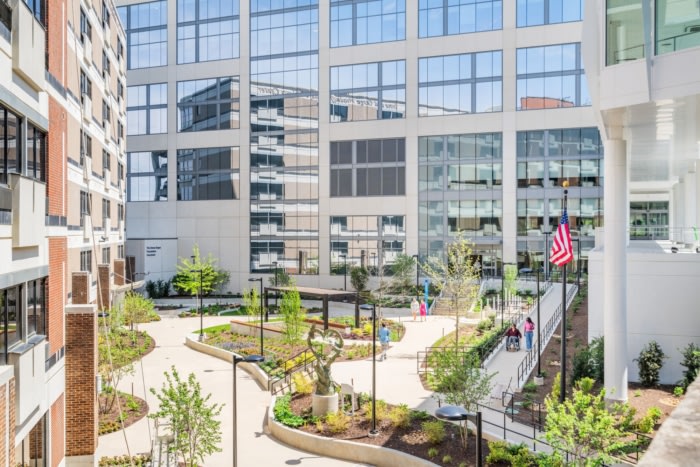
The Marcus Center for Advanced Rehabilitation (MCAR) building at Shepherd Center redefines the standard for user-centric neurorehabilitation facilities through innovative design, technology integration, and thoughtful collaboration across all user groups at all levels of the project. The MCAR building is a 14-story, 389,000-square-foot building that provides extensive medical spaces, allowing the nationally ranked neuro-rehabilitation center to expand its outpatient clinics. This expansion doubles the size of the Spine and Pain Institute and dedicates an entire floor to research and innovation, while preserving its core mission of patient care.
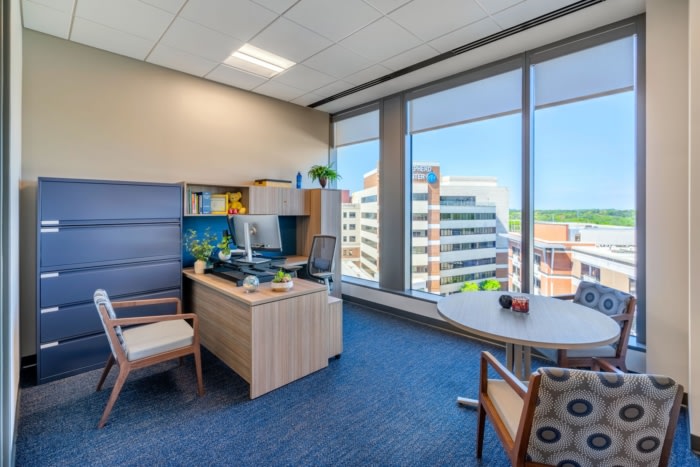
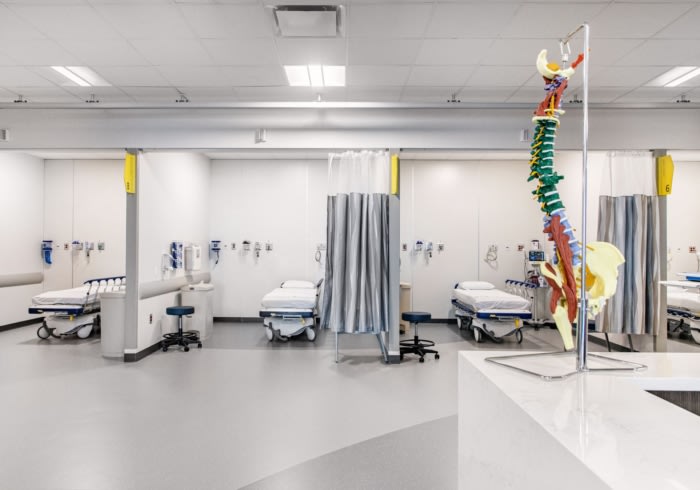
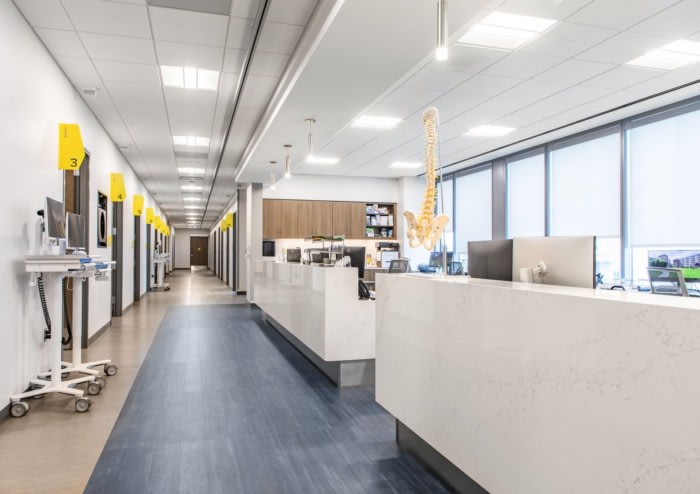
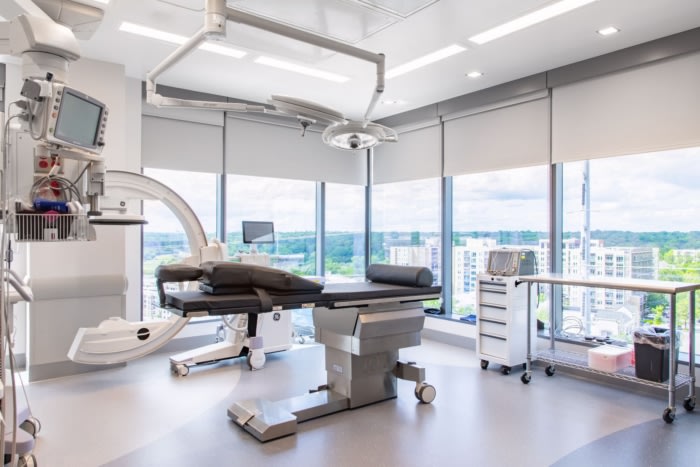
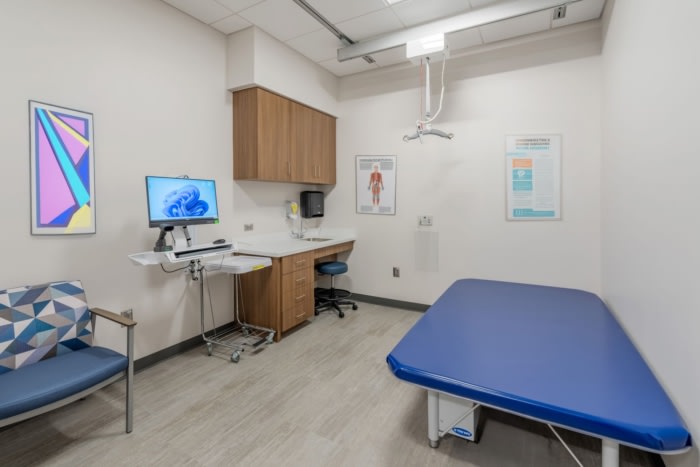
The Spine and Pain Institute is equipped with exam and procedure rooms designed to enhance medical staff efficiency with advanced technology. The procedure rooms are located at the end of the floor, freeing up more programmatic open floor space for intentional movement and circulation of patients and staff. Each room features abundant natural light, motorized shades to support light-sensitive patients, and wall and ceiling-mounted equipment to keep the floor clear and promote a hygienic environment. Within the procedure rooms, advanced technology includes a Pyxis machine that stores and dispenses medical drugs, the C-arm, and the surgical boom, which together provide real-time X-ray imaging.
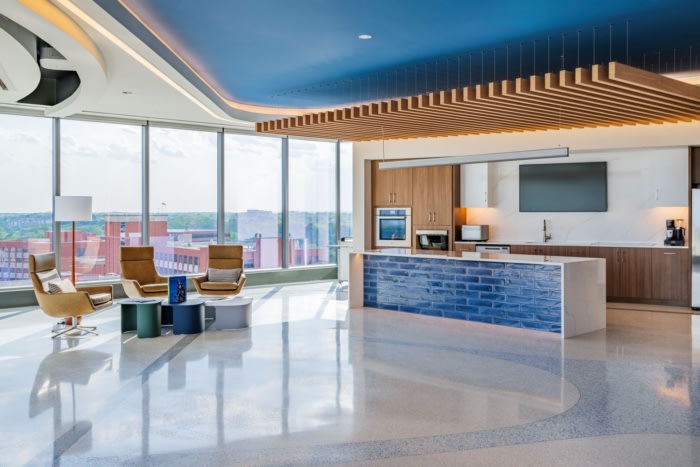
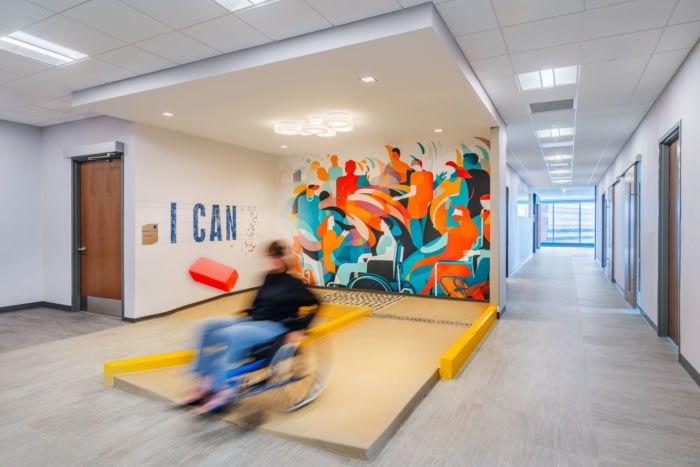
A unique programmatic challenge to the MCAR building involved incorporating outdoor terrain conditions on the top floor of the wheelchair seating clinic, where patients practice mobility. To replicate these outdoor conditions indoors, the design team incorporated an innovative obstacle course featuring elements such as curbs, ramps, and cobblestones, allowing for a realistic simulation in a controlled and convenient environment. In addition to outdoor terrains, increased access to natural daylight was a recurring design theme that guided the outcome of bright, well-lit spaces throughout the new building.
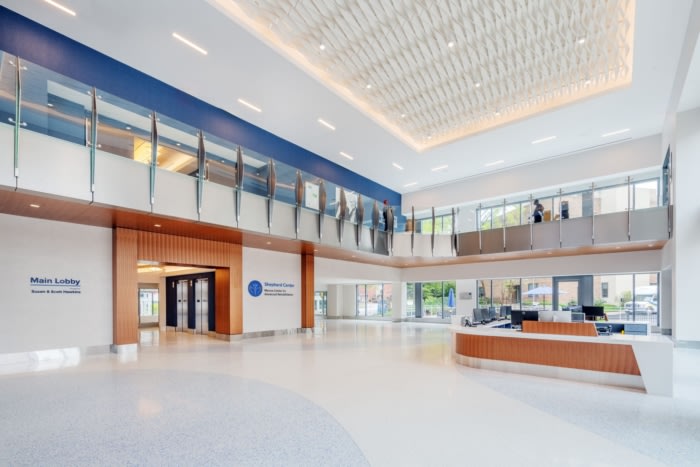
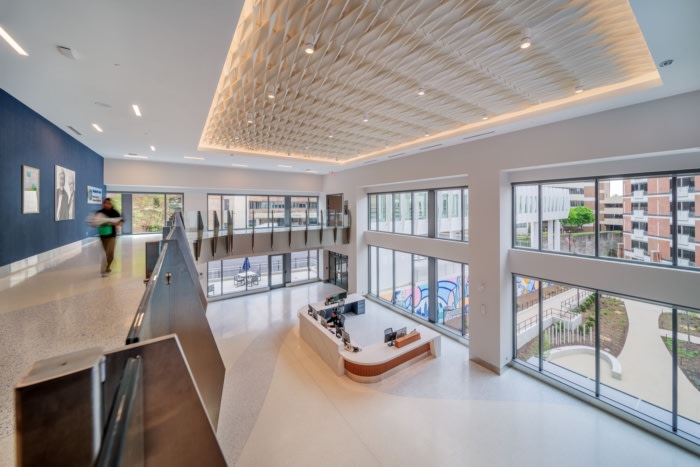
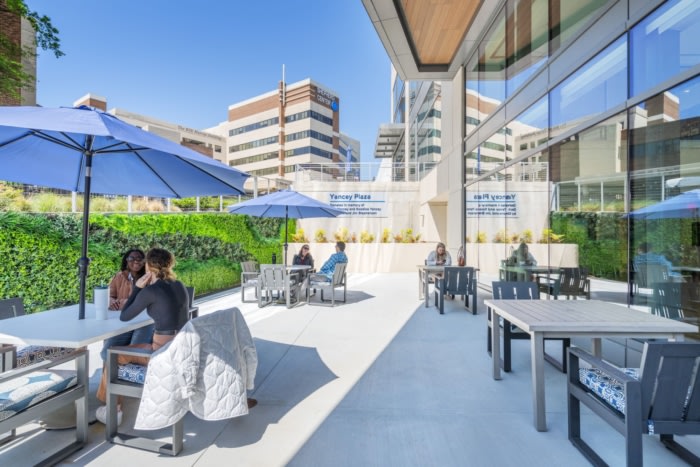
The architectural skybridge, inspired by the 33 vertebrae of the human spine at birth, seamlessly connects the new facility to the existing hospital. It also establishes a patient connection between buildings that avoids the vehicular congestion on the ground floor. The bridge also offers a moment of respite and views to therapeutic gardens and outdoor green spaces, contributing to a holistic healing environment.
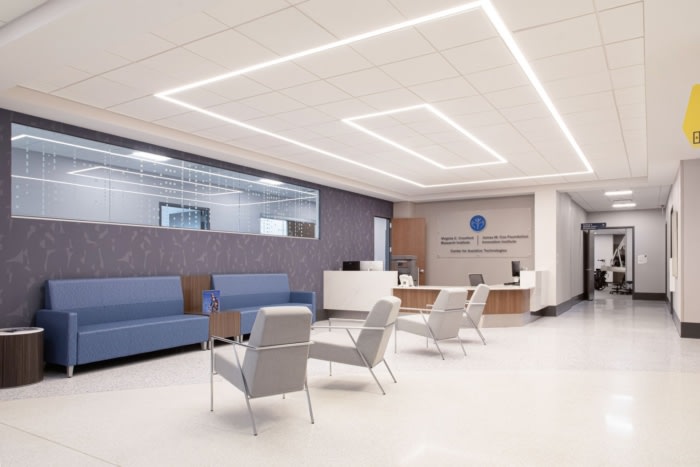
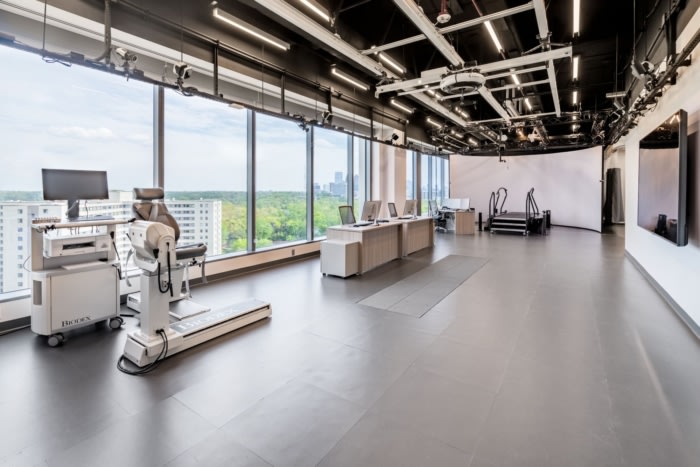
The Virginia C. Crawford Research Institute integrates rigorous research, data science, groundbreaking rehabilitation and assistive technologies, and revolutionary care models to restore, sustain, and protect the lives of people requiring neurorehabilitation worldwide. At its core, the 30,000 SF innovation institute uses data to develop and guide point-of-care precision rehabilitation and the creation of new technology solutions. Inside, highlights include a demo kitchen and bathroom equipped with voice-activated appliances and plumbing fixtures, a driving simulator for real-world rehabilitation, and an Assistive Technology Lab capable of customizing and 3D-printing devices to aid in mobility and accessibility. Advanced rehabilitation technology includes a Motion Lab with force plates, a camera system for gait analysis, and a MoTek treadmill with a 180-degree immersive screen. Advanced Zero-G patient lifts are installed in both the Motion Lab and Hulse Lab to enhance patient safety and mobility training.
The Marcus Center for Advanced Rehabilitation showcases how innovative design can transform lives. It’s a space that not only supports medical advancement but also deeply honors the patients and families it serves, setting a new standard for healthcare environments.
Design: Rule Joy Trammell + Rubio
Contractor: Choate Construction Company
Photography: William Twitty, ClearSky Images





Now editing content for LinkedIn.