Wye Valley Community Diagnostic and Treatment Centre
Architype and Medical Architecture’s Wye Valley Community Diagnostic and Treatment Centre in Hereford embodies a patient-focused design, offering a welcoming environment for diagnostic services while integrating sustainable, flexible architectural solutions.
Construction has completed on a Community Diagnostic Centre (CDC) in Hereford, designed with a patient-focused approach to provide a reassuring environment for imaging and testing.
Designed by Architype and Medical Architecture for Wye Valley NHS Trust, and constructed by Speller Metcalfe via the NHS ProCure23 (P23) framework, the £18 million centre is part of a national initiative to boost NHS diagnostic capacity by providing CDCs in local communities close to people’s homes, making services more convenient and accessible. The P23 framework enabled early engagement of the full project team, supporting a highly collaborative approach throughout design and construction.
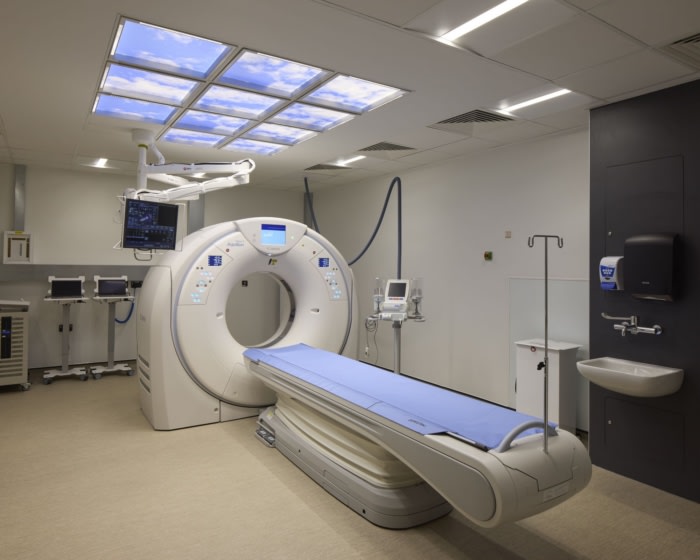
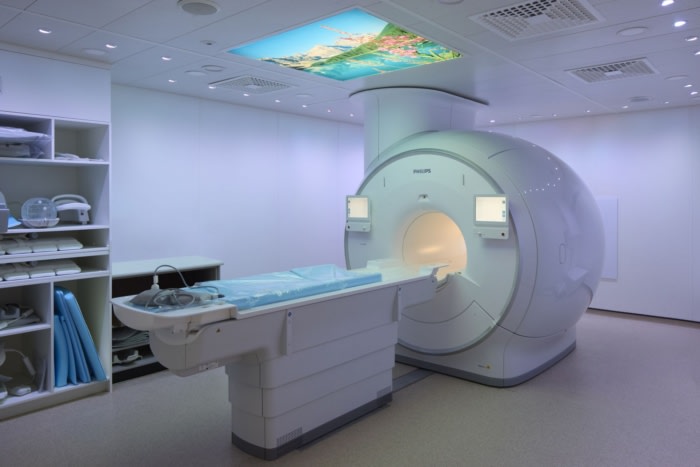
The building was officially opened by Government Minister of State (Department of Health and Social Care), Stephen Kinnock, and accommodates a range of services, from easily accessible blood testing facilities with more complex diagnostic imaging, including X-ray, CT, and MRI.
Located adjacent to a well-connected retail park, and open 12 hours a day, the facility is easily accessible for local residents. This enables routine diagnostics to take place away from the local county hospital in an environment that feels more welcoming and less clinical. It also relieves capacity pressure and traffic at the hospital site by reducing the need for outpatient visits.
A less clinical and more patient focused environment
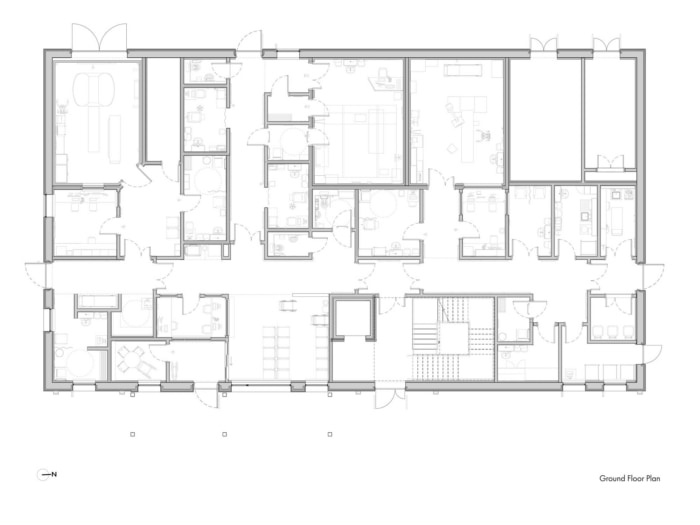
The building’s internal spaces have been designed to meet the specific technical, and safety requirements of a modern diagnostic facility, whilst also supporting a positive patient experience.
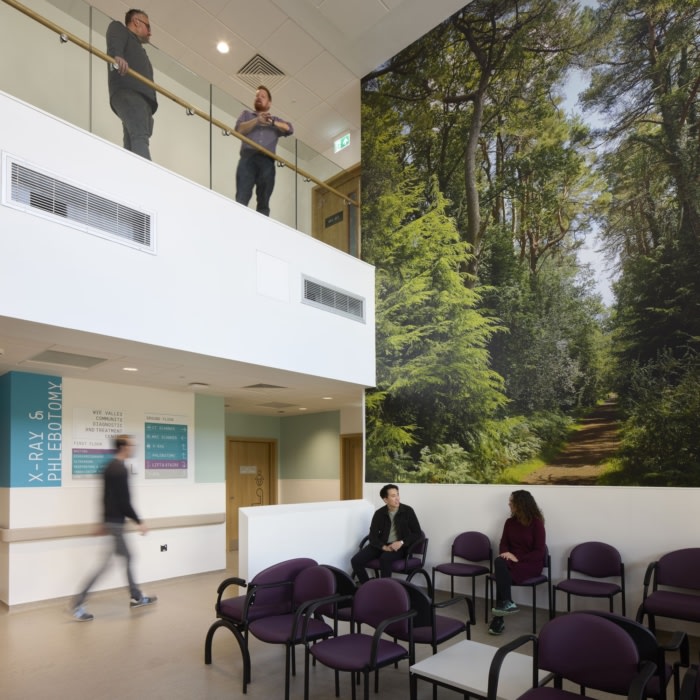
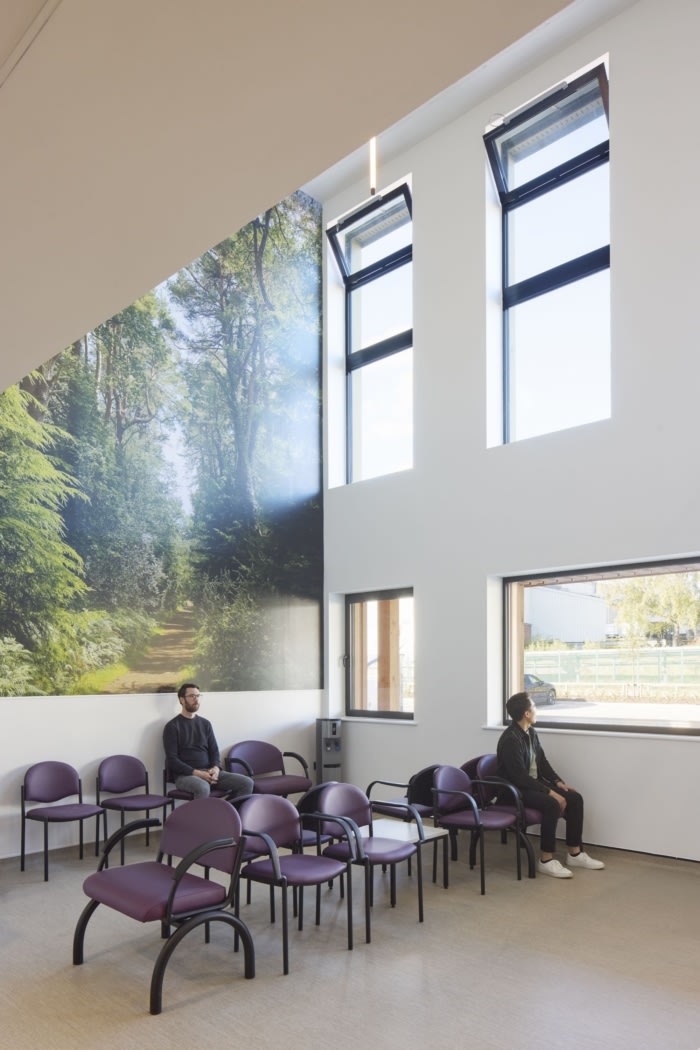
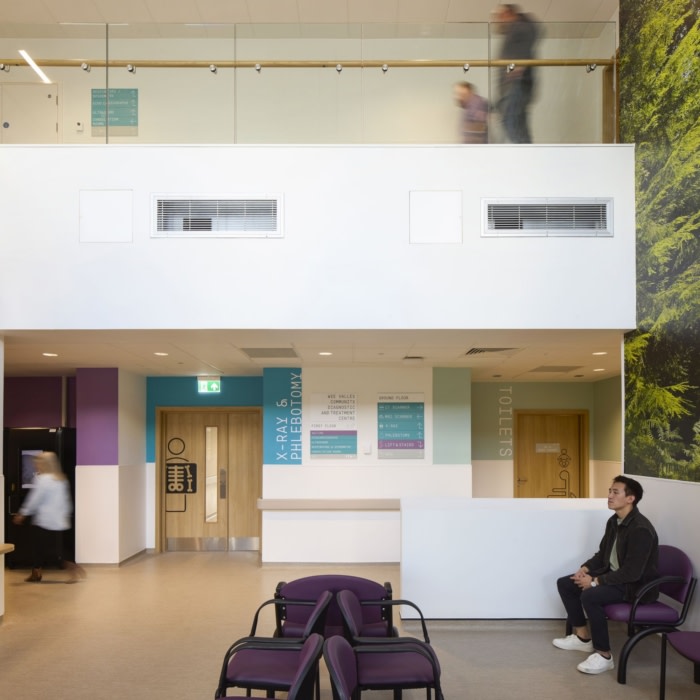
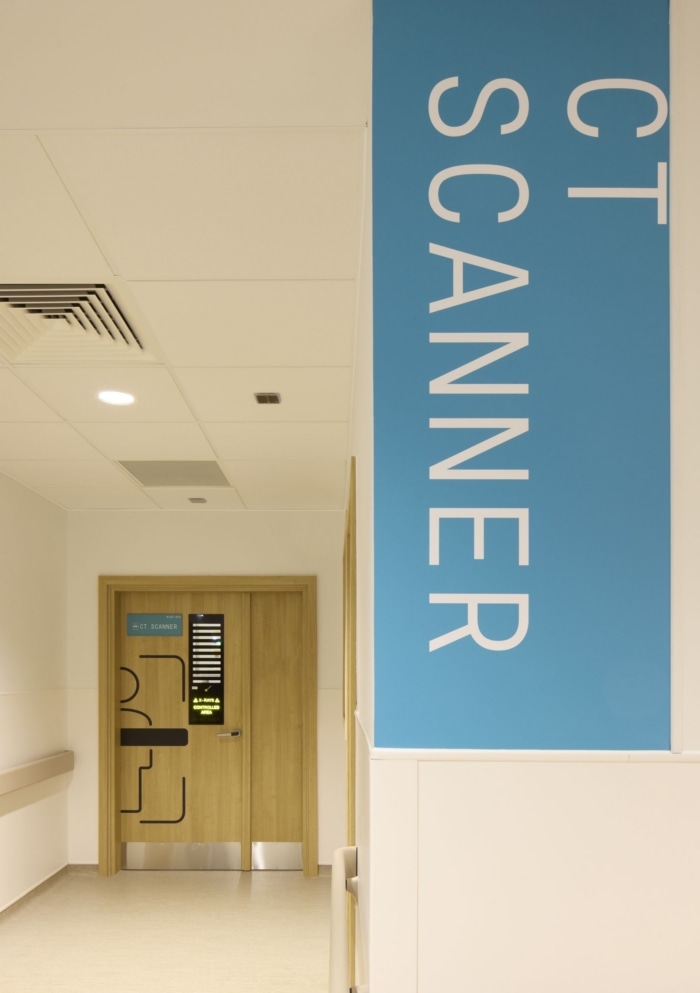
The double-height entrance and waiting foyer welcomes visitors into a central space that acts as an internal landmark akin to a town square, supporting straightforward navigation through the building. This supports the use of simple and intuitive wayfinding, by removing unnecessary visual clutter and signage the interior spaces become more familiar, and less institutional in their character.
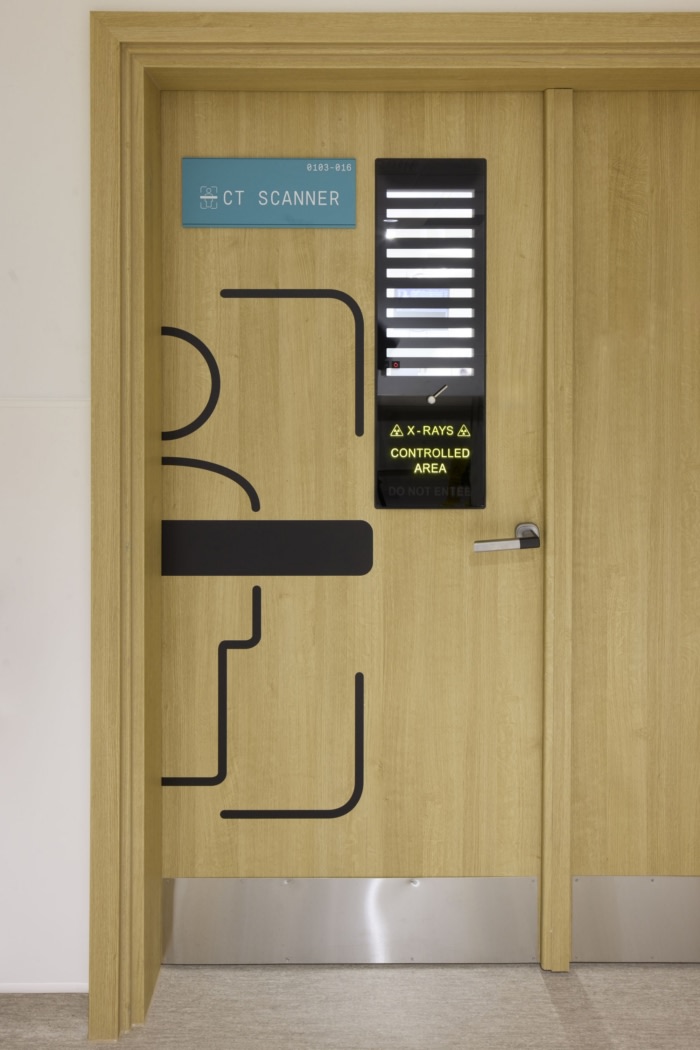
A bespoke interior design and wayfinding strategy has been developed using universal design principles, with distinctive colours and graphic iconography employed to identify different space types. This approach improves legibility and accessibility for a broad range of users, including younger visitors, people with visual impairments, and those who do not speak English as a first language.
A great place for staff to work
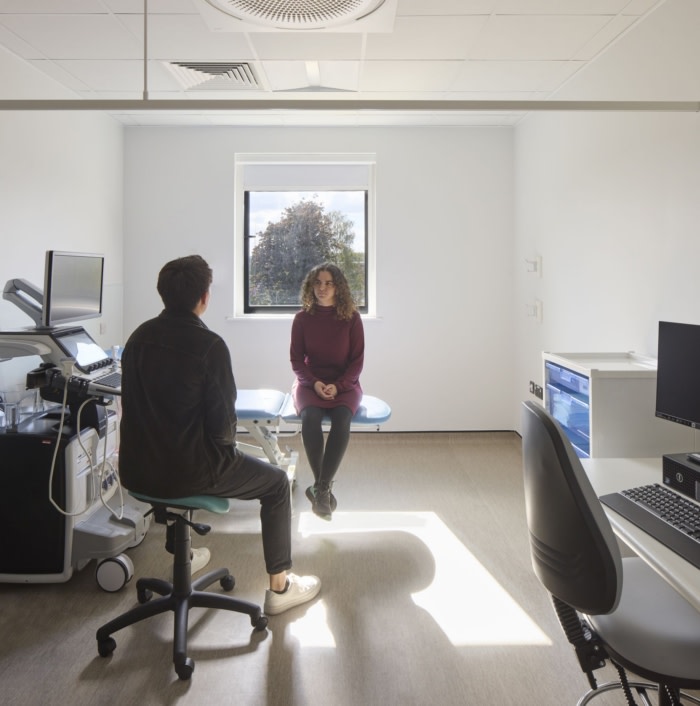
The clinical spaces vary from highly-tailored specialist facilities, to more flexible spaces which can accommodate a wide range of more generic clinical activities in a highly cost-effective manner. Careful attention has been paid to their design, ensuring that they support ergonomic working conditions, as well as patient comfort and dignity. Dedicated changing facilities are located adjacently to the imaging rooms, providing convenient access and maintaining privacy.
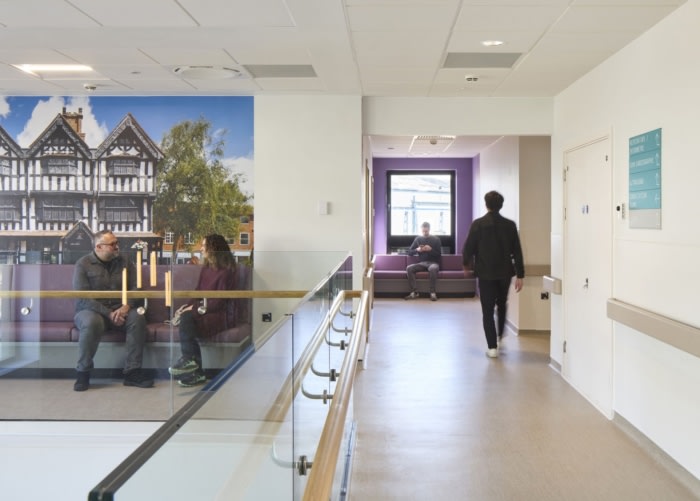
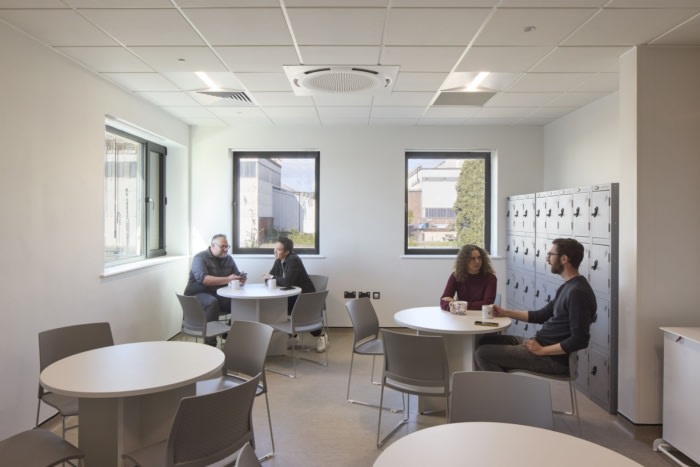
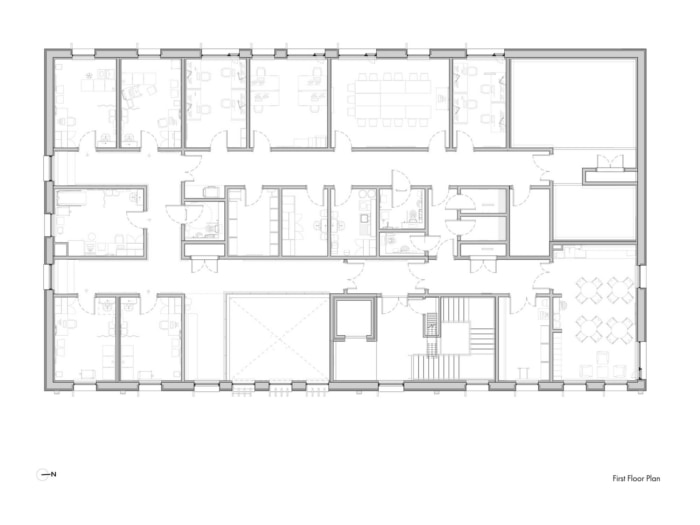
Spaces for patients to consult with clinicians are provided on the first floor alongside the staff welfare facilities where generous views and natural daylight promote wellbeing.
A distinctive building designed for future flexibility
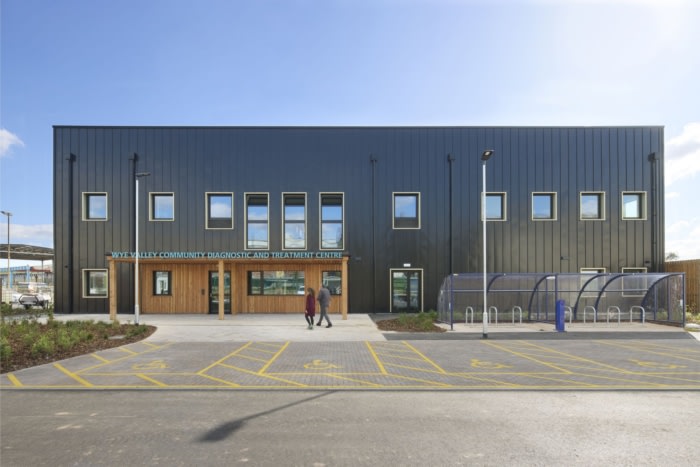
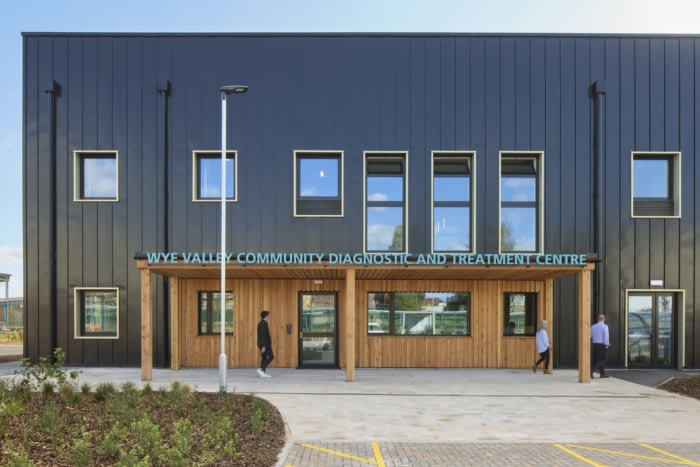
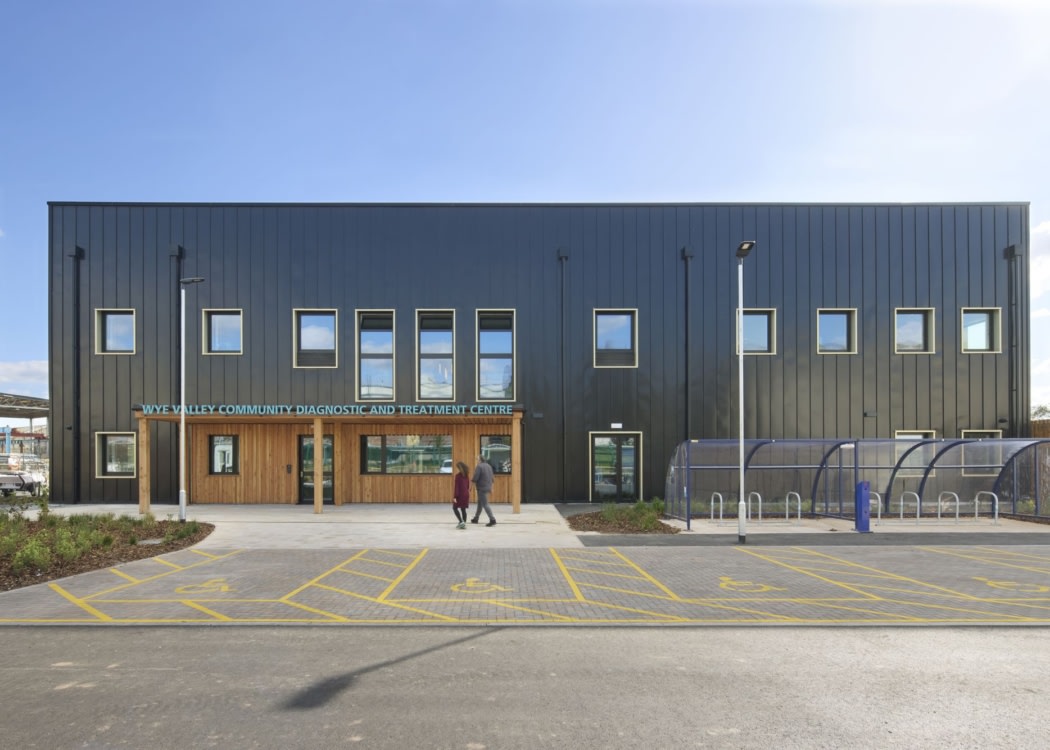
Externally, a black standing-seam metal cladding has been selected as the primary material for the elevations. This provides a contemporary interpretation of the local industrial context, whilst creating a distinct identity which aids navigation to the site.
As visitors approach the diagnostic centre, softer timber details become apparent within the outside canopy. Vertical timber cladding elements frame the main entrance providing a clear destination.
The building has been designed to enable straightforward reconfiguration or expansion over time, so that complimentary services can be integrated on the site.
Sustainable design using Passivhaus principles
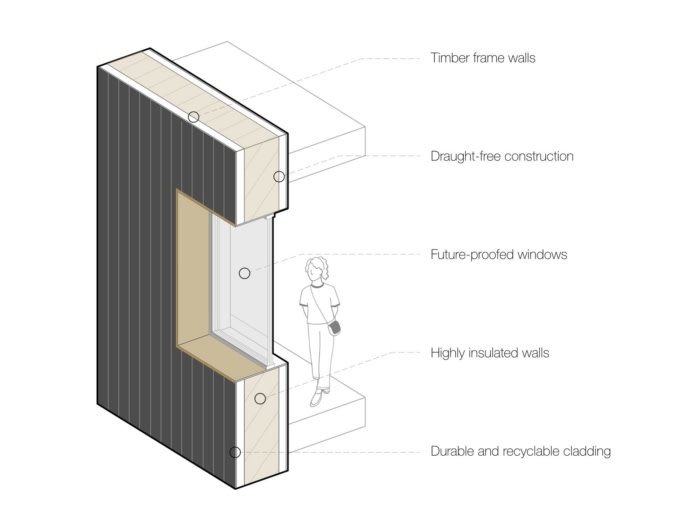
The building design is underpinned by Passivhaus principles to reduce energy demand, lower operational costs and provide a comfortable internal environment. This includes employing a fabric first approach which prioritises thermally efficient walls, floors and roof, with robust detailing and airtightness. The design is aligned with the principles of the NHS Net Zero Carbon Building Standard and achieved a BREEAM Excellent score of 74.1%.
Embodied carbon has been minimised using a prefabricated structural timber frame combined with precast concrete floor plates, reducing material use and construction waste. The building’s orientation and glazing strategy are carefully designed to optimise natural daylight and views while minimising overheating, glare and heat gain through controlled façade design and passive shading.
Design: Architype and Medical Architecture
Photography: Richard Chivers