
Illawarra Women’s Health Centre – Women’s Trauma Recovery Centre
Edmiston Jones’ Illawarra Women’s Health Centre in Shellharbour integrates trauma-informed design with natural light and biophilic elements, fostering a warm, welcoming environment for women overcoming personal challenges through nuanced co-design.
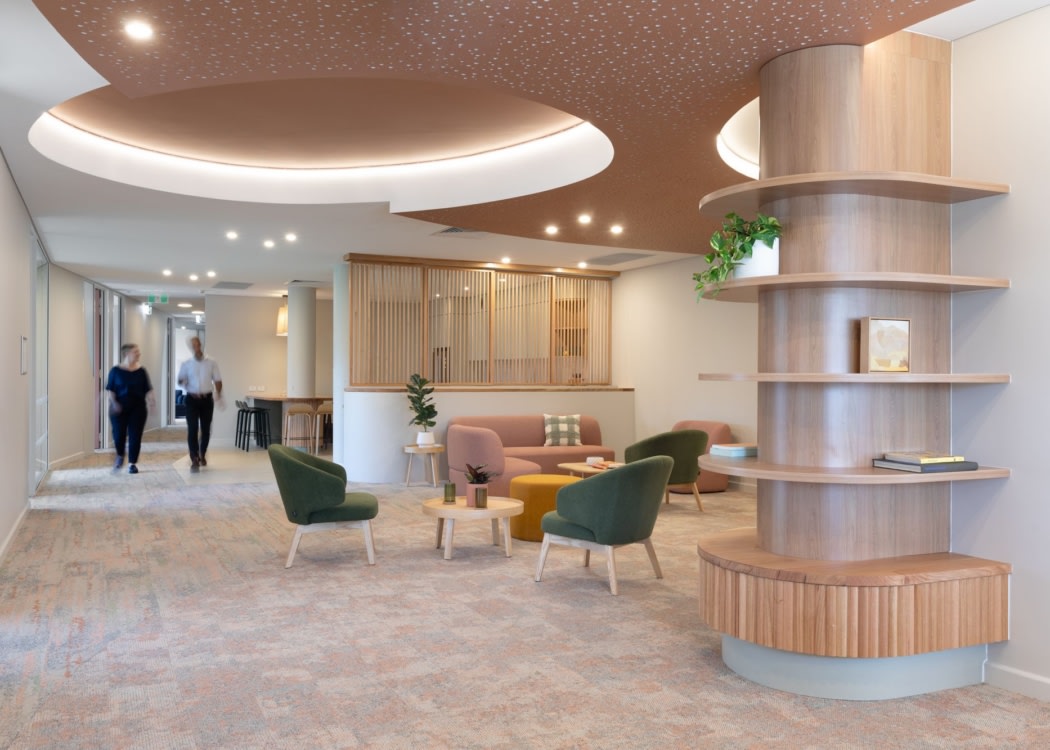
The Centre provides evidence-based support for victim-survivors of family, domestic and sexual violence. Co-designed with women with lived experience and Aboriginal women, its trauma-informed interiors prioritise welcome, privacy and security. Natural light, symbolism and flexible, acoustically private spaces create a calm, protective environment, a prototype fast-tracked for future centres.
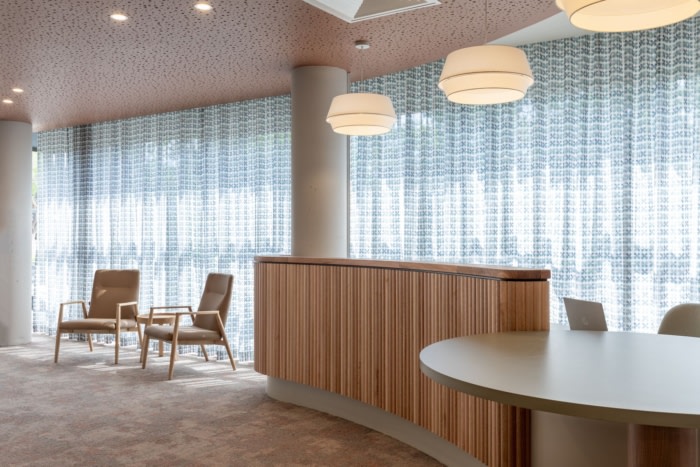
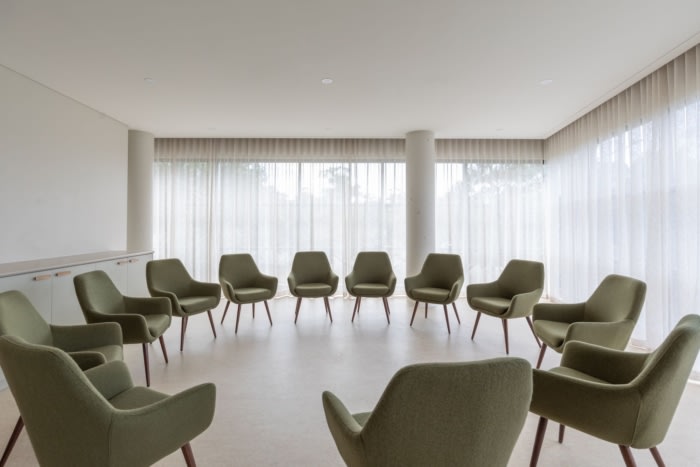
The tenancy occupies a long, angular footprint defined by a continuous band of east-facing, floor-to-ceiling glazing. The interior planning draws this natural light deep into the entry foyer, circulation spine and shared spaces, while framing expansive views to the adjoining parkland. These outlooks are shaped through biophilic principles of prospect and refuge, balancing openness with safety. Layered window treatments modulate privacy, allowing spaces to feel connected yet protected.
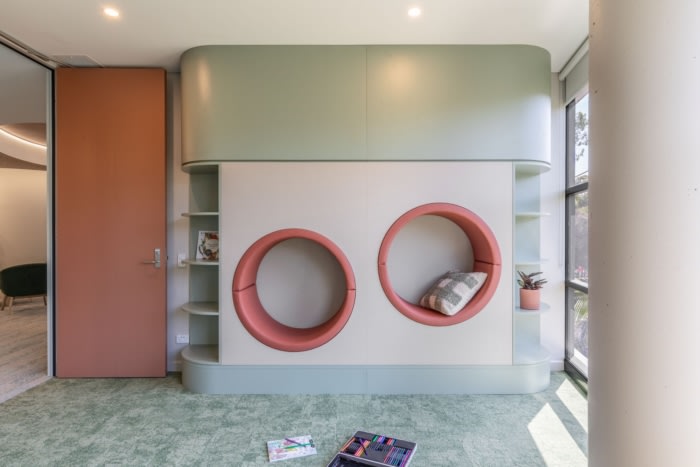
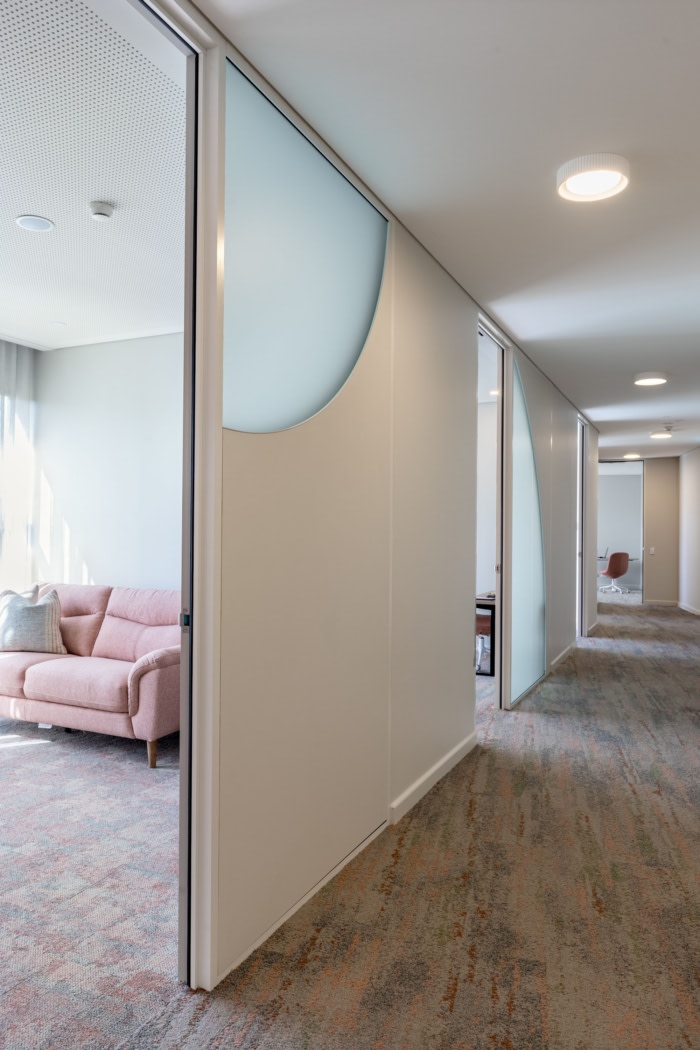
Flexibility was central to the design. Adaptable rooms accommodate a range of practitioners and modes of care. Custom-designed partitions provide high levels of acoustic privacy while maintaining visual connection where it supports healing. A soft, curved design language—developed collaboratively with women with lived experience—unifies both plan and elevations, reducing institutional formality and supporting calm movement through the Centre.
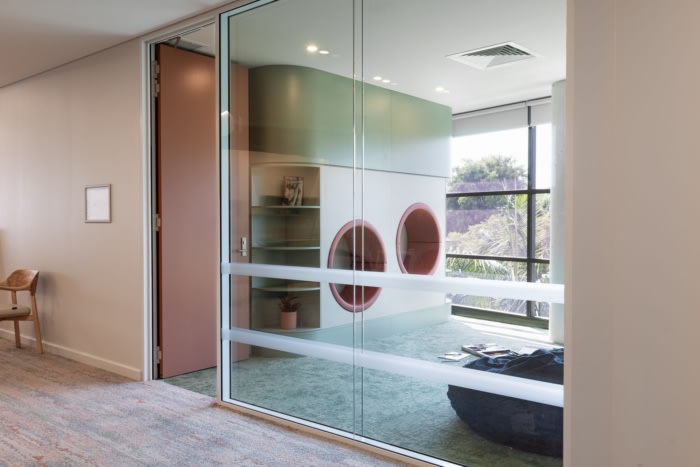
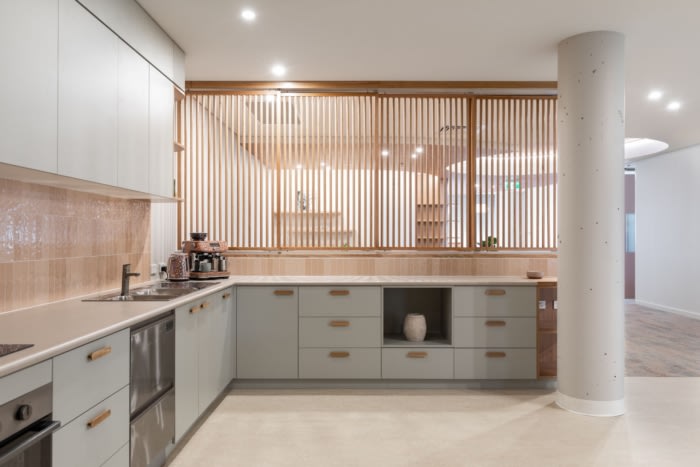
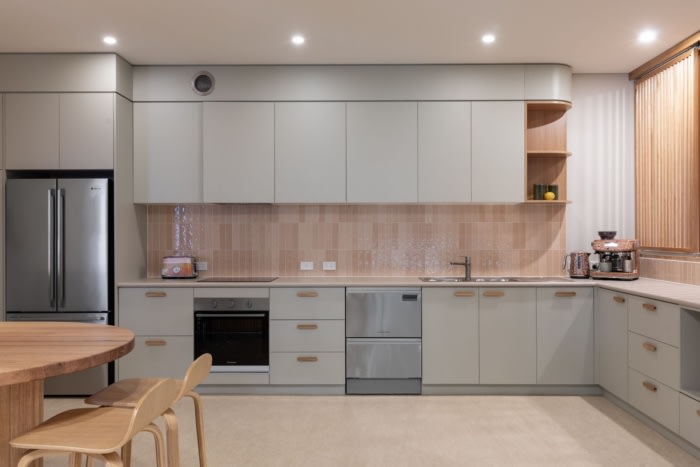
The interior palette was co-designed with clients, using muted, nature-informed colours and tactile finishes to create warmth, dignity and ease. A glazed wall between children’s spaces and counselling rooms allows visual reassurance during confidential sessions. Cultural safety is embedded through collaboration with the Aboriginal Women’s Reference Group, whose ceiling-mounted coolamon—a traditional women’s vessel—forms a symbolic canopy of protection, clearly identifying the Centre as a women’s space for care and recovery.
Edmiston Jones’ design for the project demonstrates excellence through its deep alignment of spatial quality, social purpose and lived experience. The interiors are calm, dignified and restorative, carefully balancing openness with privacy to support women and children at their most vulnerable. The centre is not only a beautiful space for community – it also offers safety and choice.
The project is defined by genuine co-design. Women with lived experience and Aboriginal women shaped the spatial planning, colour palette and symbolic elements, ensuring the Centre feels welcoming rather than institutional. A soft, nature-informed palette, curved forms and tactile materials reduce anxiety and foster ease. Cultural safety is embedded through the coolamon-inspired design in the ceiling, offering a clear, protective identity as a women’s space.
Delivered under urgent timeframes, the Centre is both highly resolved and adaptable, providing a replicable, trauma-informed model for future facilities addressing Australia’s family violence crisis.
Innovation is embedded in the design methodology. Edmiston Jones led an intensive, trauma-informed co-design process that meaningfully embedded the voices of women with lived experience and Aboriginal women into every interior decision. Spatial planning, colour, form and symbolism emerged collaboratively, not retrospectively. The interior delivers clinical, professional performance without institutional cues through warmth, flexibility and dignity. The result is an interior that operates as both a place of care and a prototype—demonstrating how collaborative, values-led design can rapidly produce safe, culturally responsive environments with lasting impact.
Design: Edmiston Jones P/L
Project Manager: NSW Public Works Advisory
Builder: CIP
Photography: Louise Wellington


Now editing content for LinkedIn.