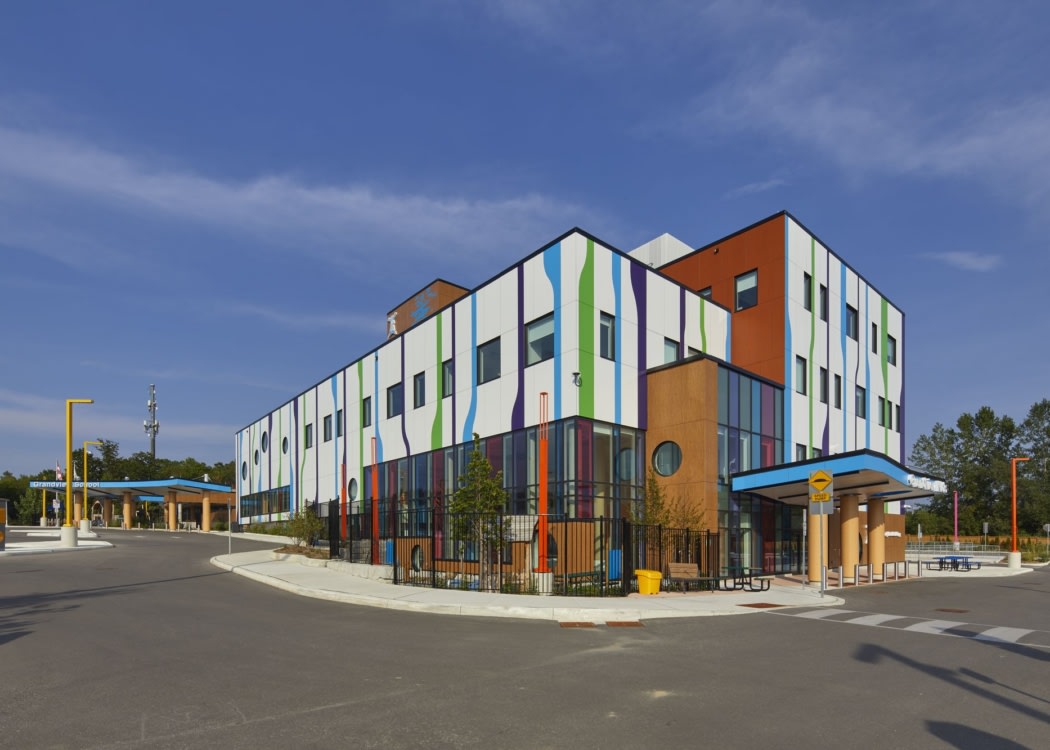
Grandview Kids Children’s Treatment Centre – The Jerry Coughlan Building
Parkin Architects’ Grandview Kids Children’s Treatment Centre – The Jerry Coughlan Building in Ajax, Canada, reimagines pediatric care through a whimsical design that fosters joy, inclusivity, and therapeutic innovation.
Grandview Kids’ new Jerry Coughlan Building is a children’s treatment centre that represents a groundbreaking achievement in healthcare facility design, fundamentally reimagining how children with developmental, physical, and speech-language disabilities experience medical care. Designed by Parkin Architects, the centre’s philosophy extends beyond functional requirements to embrace joy, inclusivity, and therapeutic innovation.
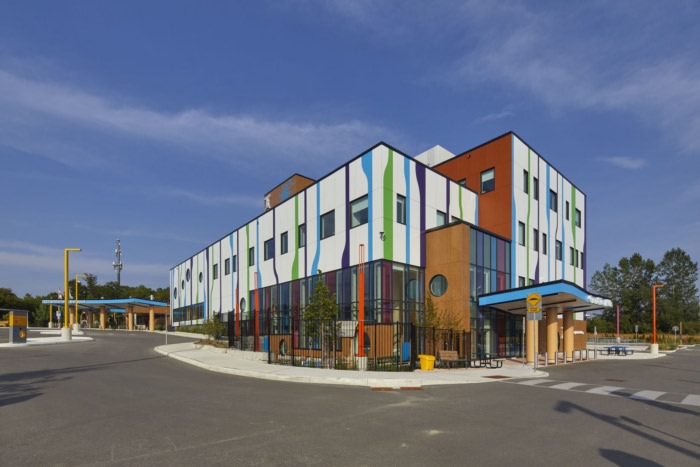
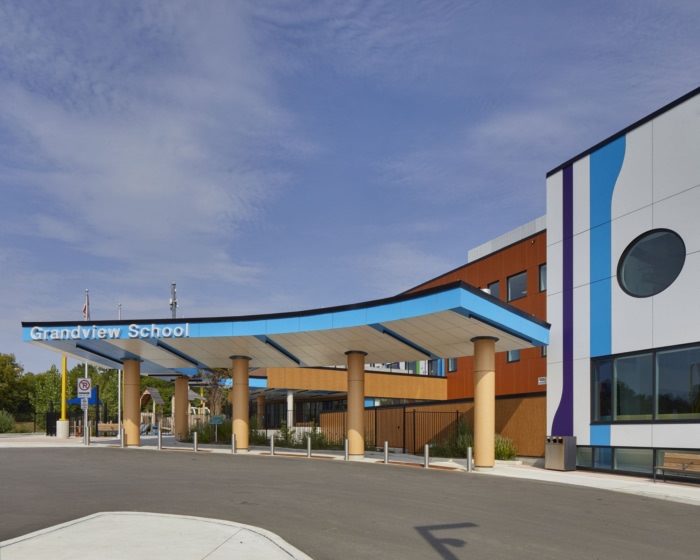
The word ‘whimsy’ guided the entire design. That ‘whimsical’ experience begins even before entering the building. On the outside, the four-story facility is clad in white exterior panels with blue, green, and purple abstract ‘lines’ that add splashes of fun to the white façade. The ground level features extensive glass curtain walls, which maximize natural light and connect indoor activity with the outdoor landscape.
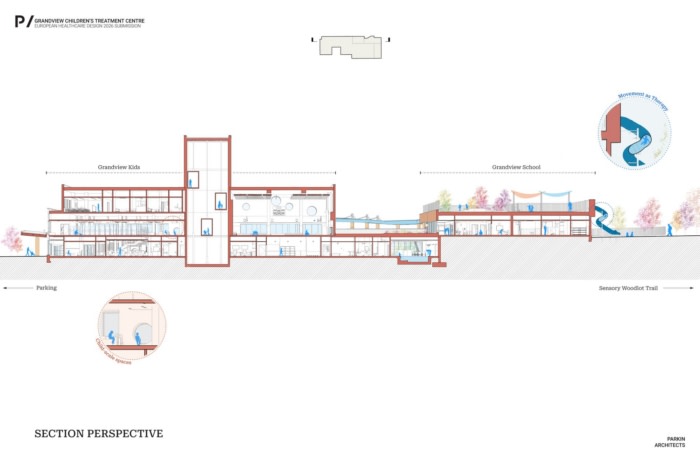
The interior design aesthetics prioritizes the emotional and psychological needs of its young clients. This approach led to spaces that feel welcoming and fun while remaining highly functional. The CEO championed this playful spirit, resulting in features such as a bright blue slide from the second-floor terrace to the ground. This feature instantly signals to clients – ranging from toddlers to 18-year-olds – that treatment and happiness can coexist.
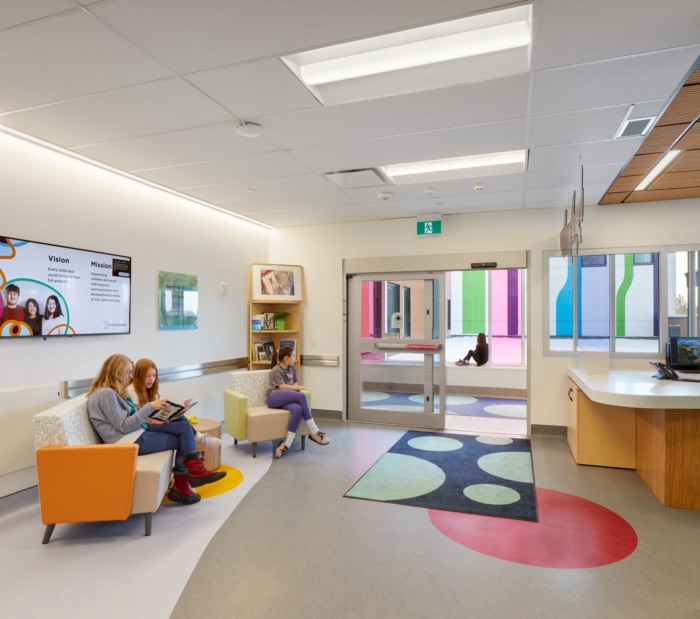
Inside, wayfinding solutions serve a dual purpose: navigation and therapeutic assessment. Large, brightly coloured circles in different hues are positioned in front of each of the three elevators. These aren’t just decorative. They allow therapists to assess children’s cognitive abilities by asking them to identify colours or distinguish shapes, so ‘assessment’ begins as soon as clients enter the building.
The wayfinding system extends throughout the facility with specific animal icons representing each department, balancing imagery with age-appropriate sophistication for the diverse age range of clients.
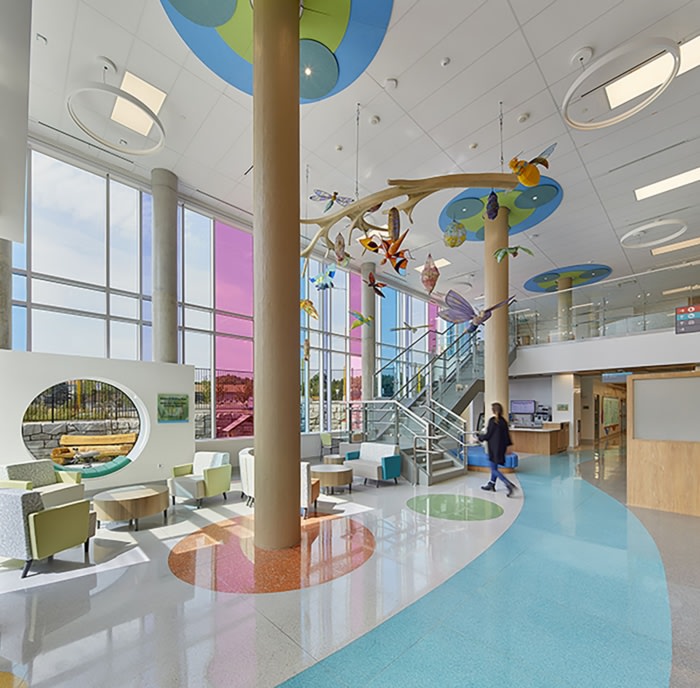
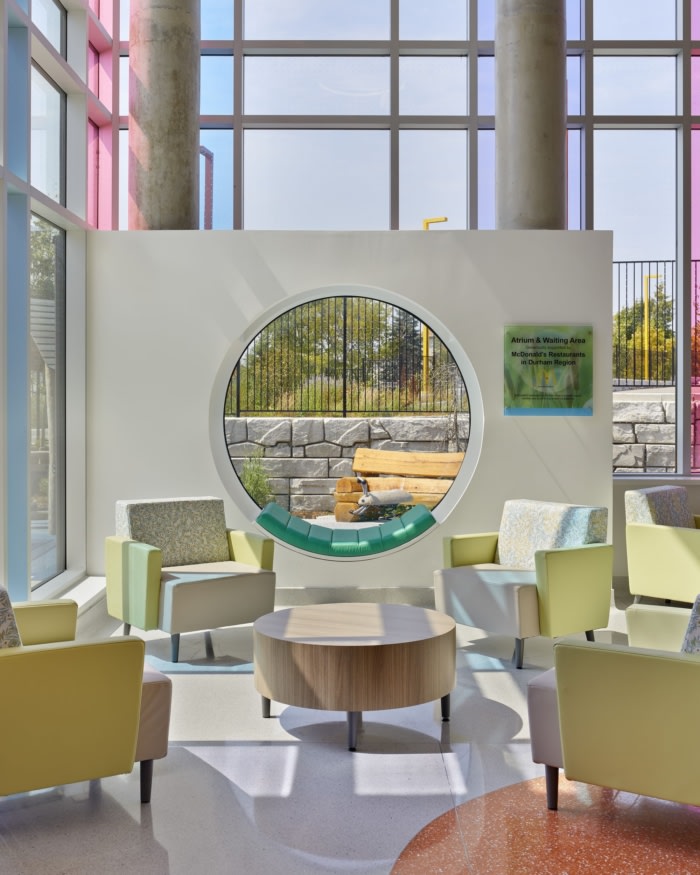
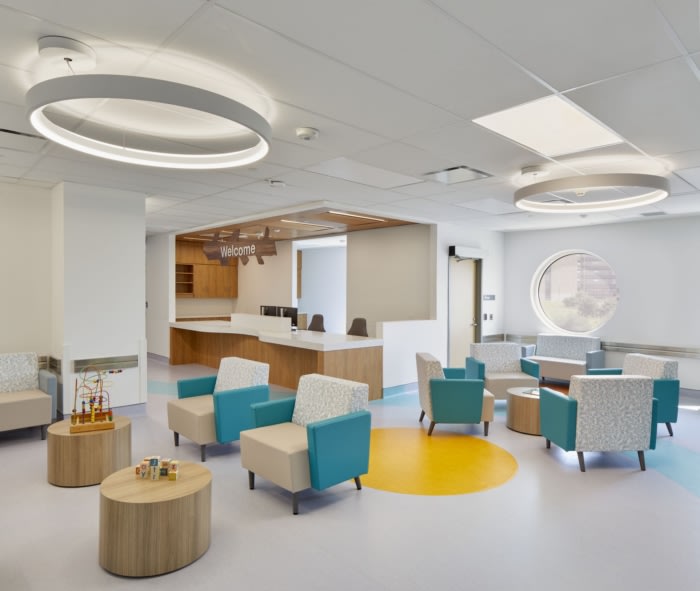
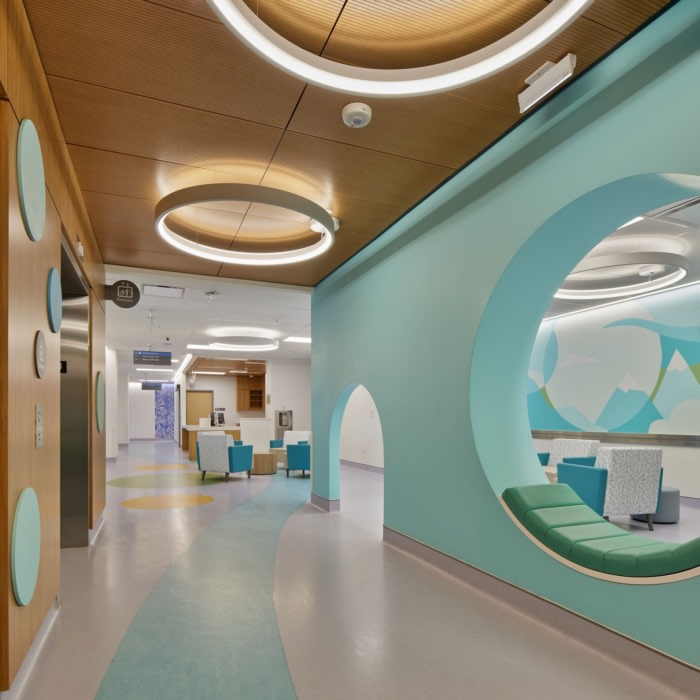
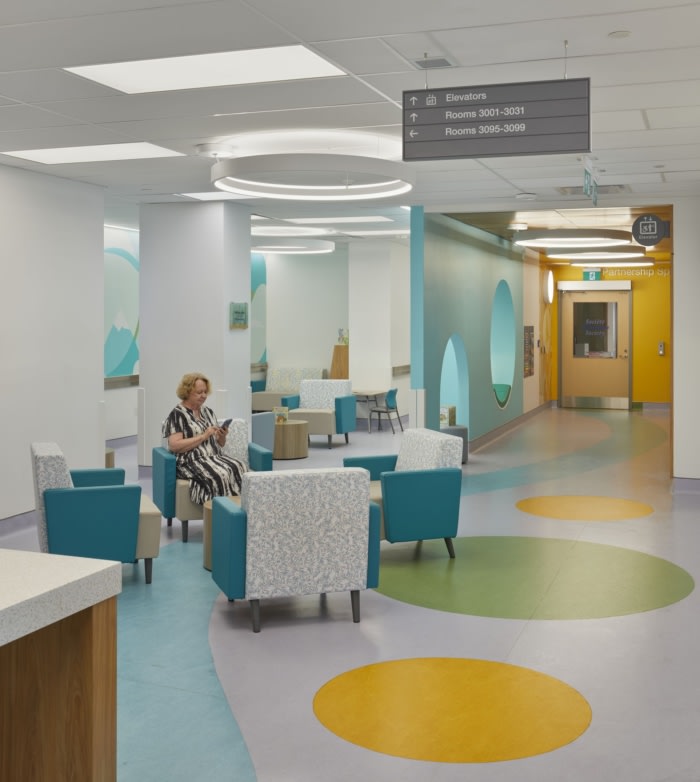
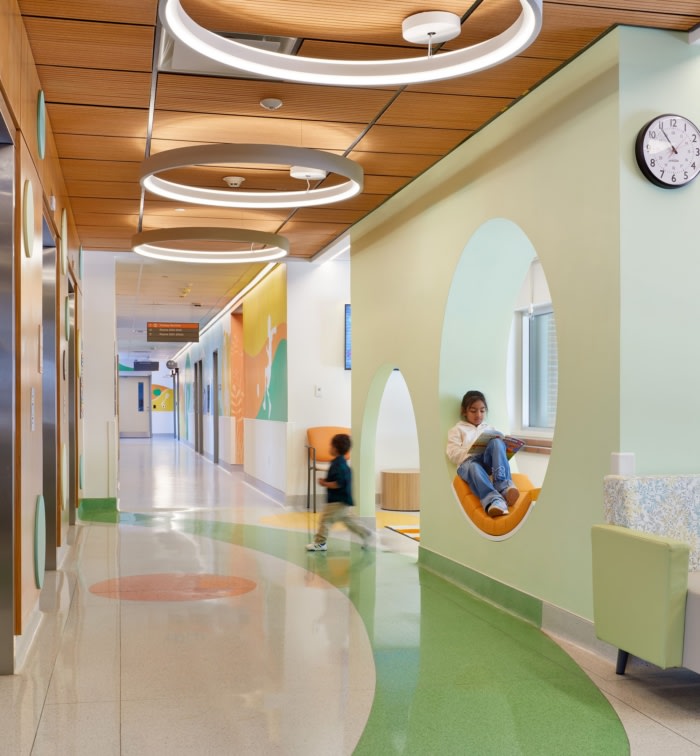
Hallway waiting areas include playful architectural elements. Large circular cutouts create ‘nests’ where children can climb or sit. Adjacent archways were designed for those using accessibility devices so children of all abilities could enjoy a wall’s playful ‘seating’. Curved, multi-colored flooring patterns add visual interest. They are used by therapists for movement exercises, and lead clients to points of interest such as elevators or reception desks.
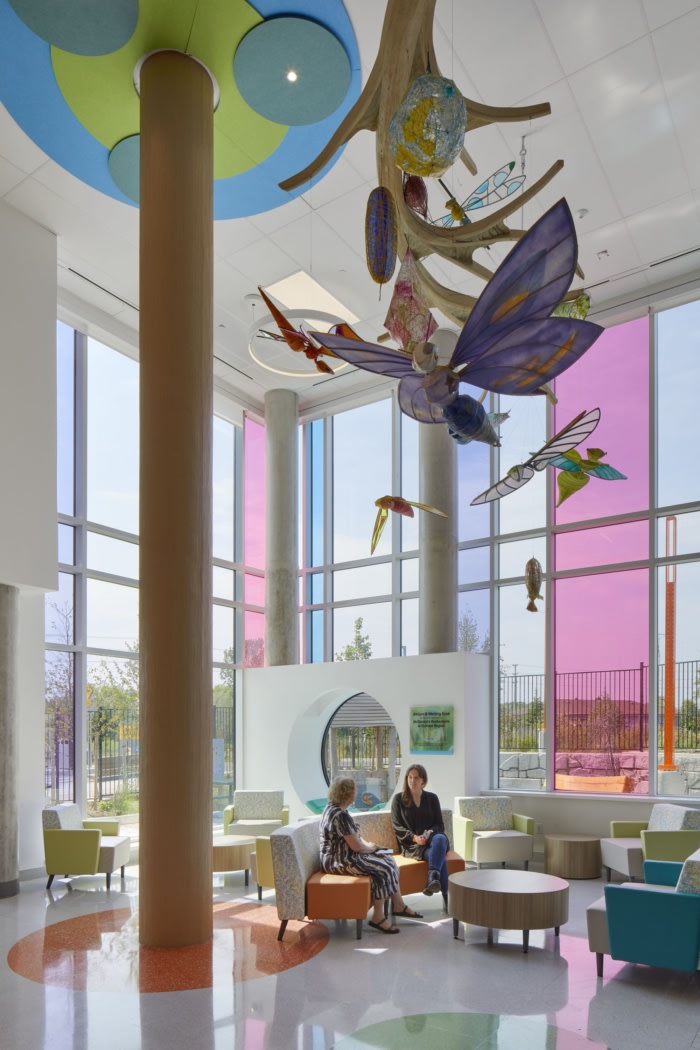
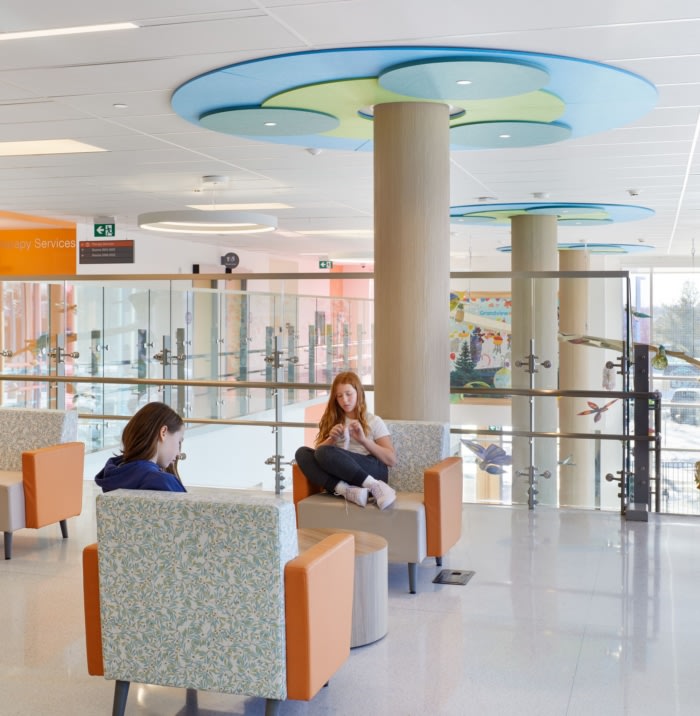
The facility carefully balances ‘energetic’ and ‘calm’ environments. For example, the main atrium is a double-height space defined by floor-to-ceiling windows featuring vibrant, pink, purple, and blue tinted glass panels. Sunlight through the coloured glass casts various hues on the polished terrazzo floor. A whimsical, large-scale mobile art installation called “Lovely Bugs” hangs from the ceiling. Artists Fly Freeman and Francis Muscat took inspiration from art created by Grandview Kids clients.
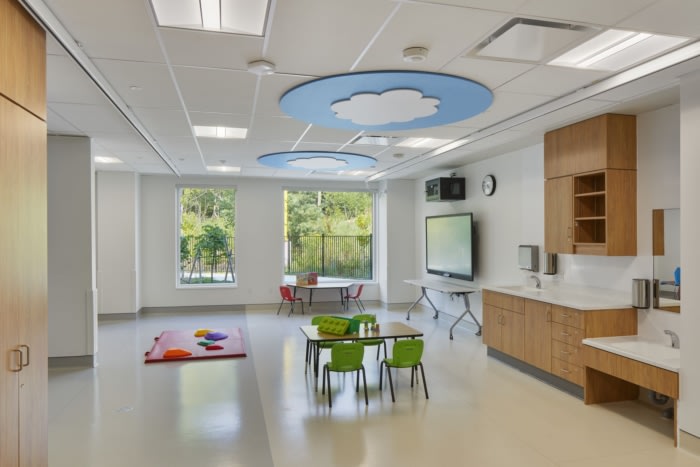
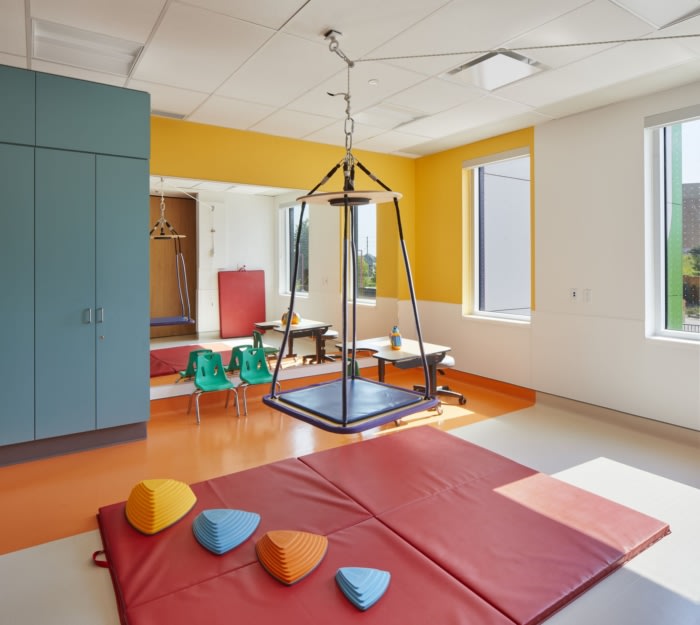
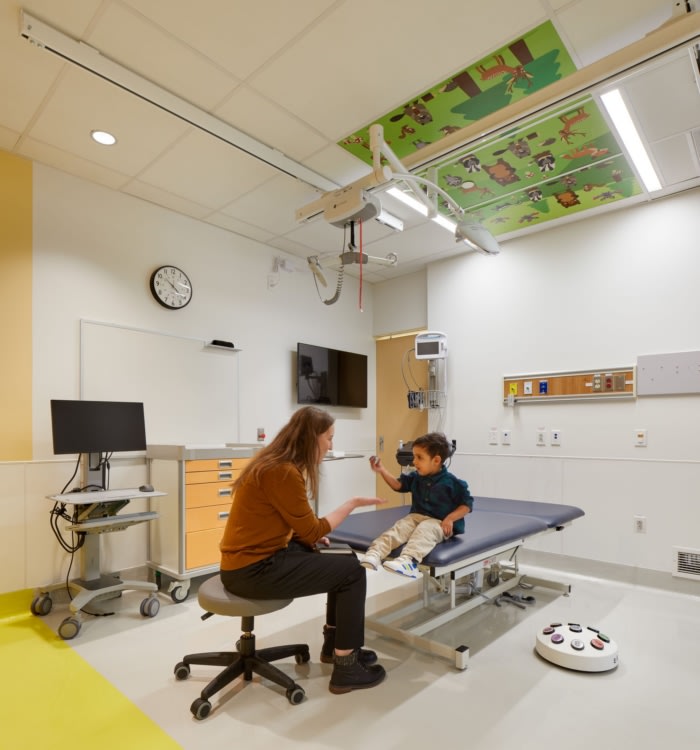
By comparison, treatment rooms adopt a mixture of palettes with some being quiet using calming tones and others being more vibrant, to help centre attention on therapy.
The third-floor Medical Services department prioritizes patient comfort during challenging treatments. Acoustic separation and a carefully controlled client flow pattern to reduce anxiety.
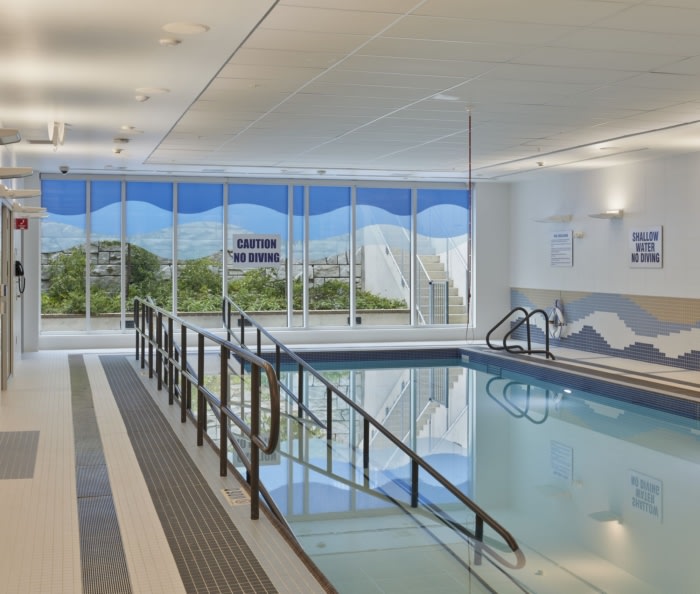
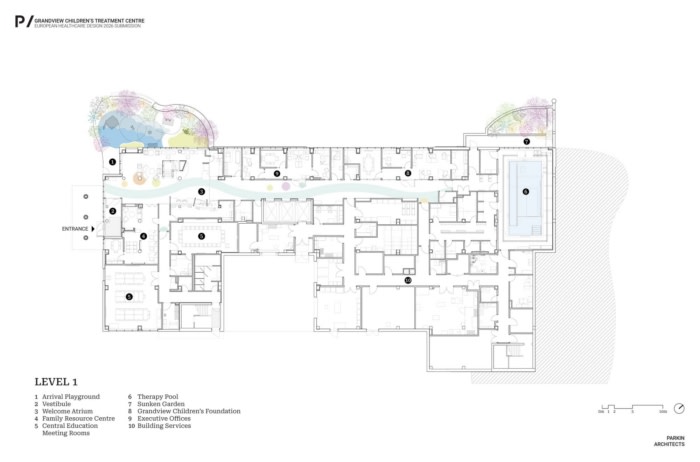
The sloping site at Grandview Kids turned a design challenge into one of the project’s most distinctive features: a sunken garden nestled beside the therapy pool. To ensure the pool remained truly accessible – open to all visitors and the broader community at any time – it needed to sit at the main level, rather than on a level that could be locked.
The pool needed direct views to nature, abundant daylight, and an adjacent garden, all while preserving privacy of the swimmers. These were challenging requirements considering the location in the building.
The design team carved out a lowered ‘sunken garden’ into the slope, allowing children in the pool to look out through large, floor-to-ceiling windows to greenery and sky. Opaque film on the upper portion of the glazing means those walking by along the outdoor paths cannot see into the pool.
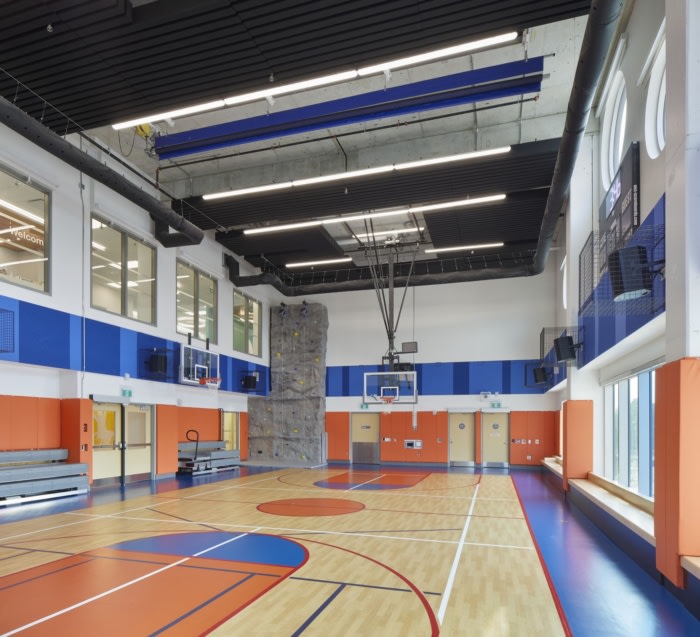
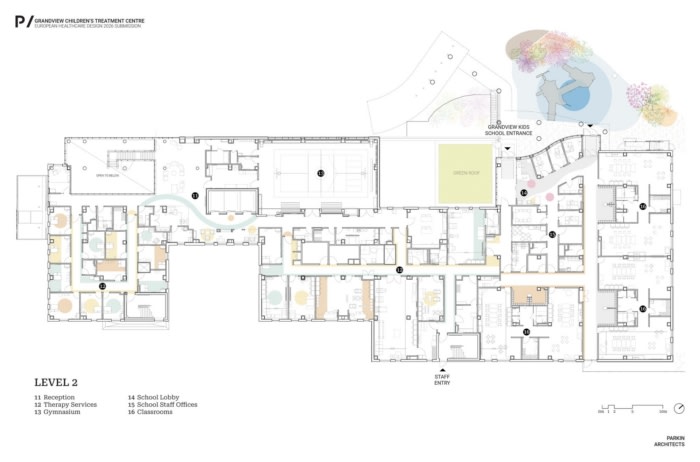
Grandview School directly attaches to the treatment centre so children can easily access shared resources like the pool and gym, but it operates as a secure, distinct zone. Classrooms connect internally to the main facility via controlled doors and access systems that allow school children and staff to move to therapy areas, while preventing general treatment-centre clients from entering the school.
Externally, the school and treatment centre has its own at-grade drop-off, supported within the sloping site, with the pool and its sunken garden positioned as a shared hinge between school and treatment functions, supporting integrated care while maintaining clear boundaries.
Grandview Kids establishes new standards for pediatric healthcare design, showcasing a treatment center that is warm, whimsical, and clinically effective.
Design: Parkin Architects
Design Partner: H.H. Angus and Associates Limited
Collaborators: Children First Consortium
Construction Team: Amico Design Build, Sacyr Construction
Photography: Tom Arban